Jump to Recipe
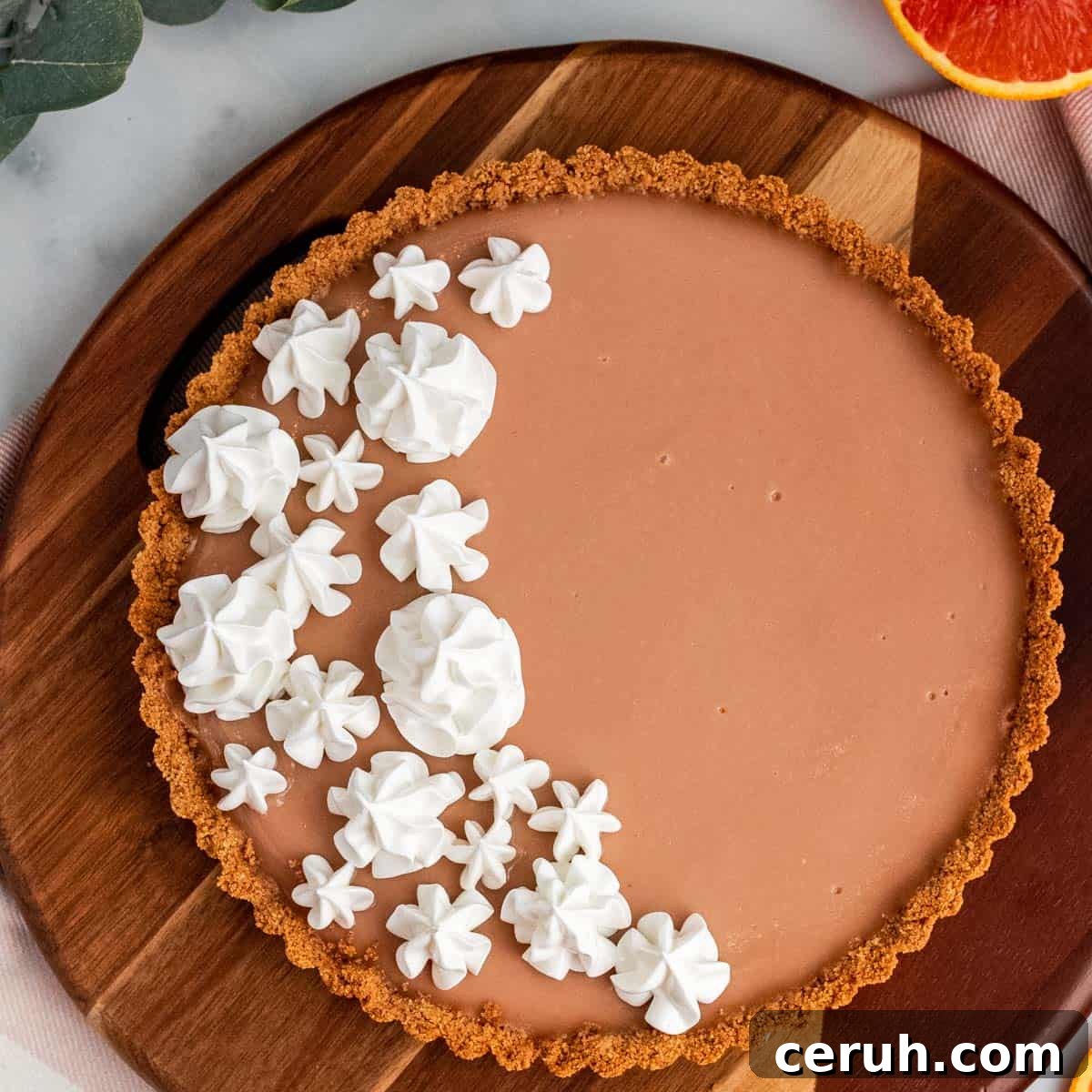
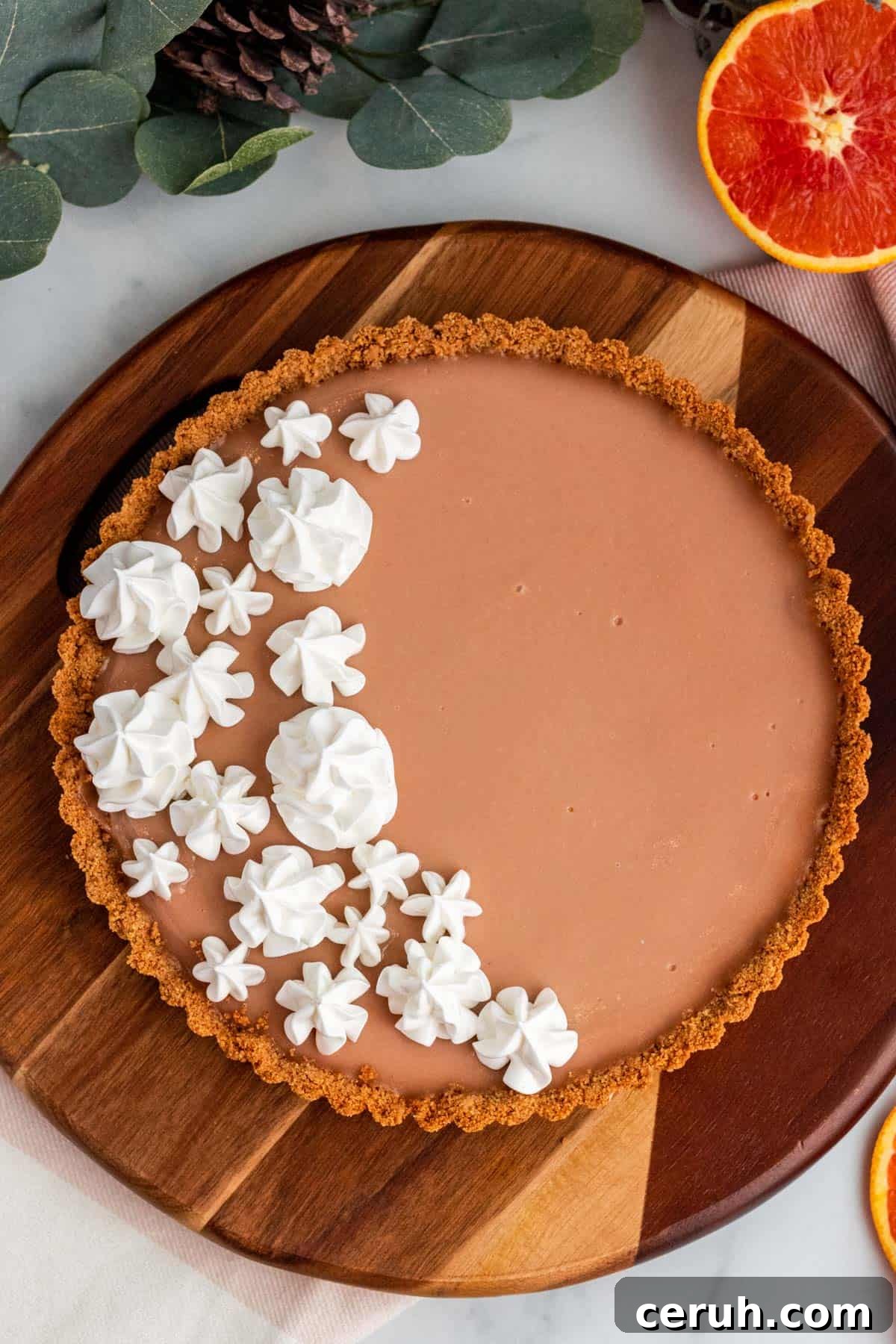
This vibrant blood orange tart with meringue is a refreshing alternative to heavier desserts. A bright, citrus blood orange curd with vivid color sits on a sweet cinnamon-spiced graham cracker crust. Finish the tart with airy meringue dollops for an elegant, festive presentation.
What are blood oranges?
Blood oranges are a winter-to-spring citrus prized for their dramatic color, which ranges from deep ruby to pink and sometimes purple. They tend to be sweeter and slightly less acidic than standard oranges, contributing a gentle sweetness and complex flavor to curds and desserts.
Because they are naturally sweet, a splash of lemon juice is added to the curd to introduce a touch of acidity and balance the flavor. Combined with a cinnamon-scented graham crust, the result is a distinctive and celebratory tart.
Cinnamon graham cracker crust
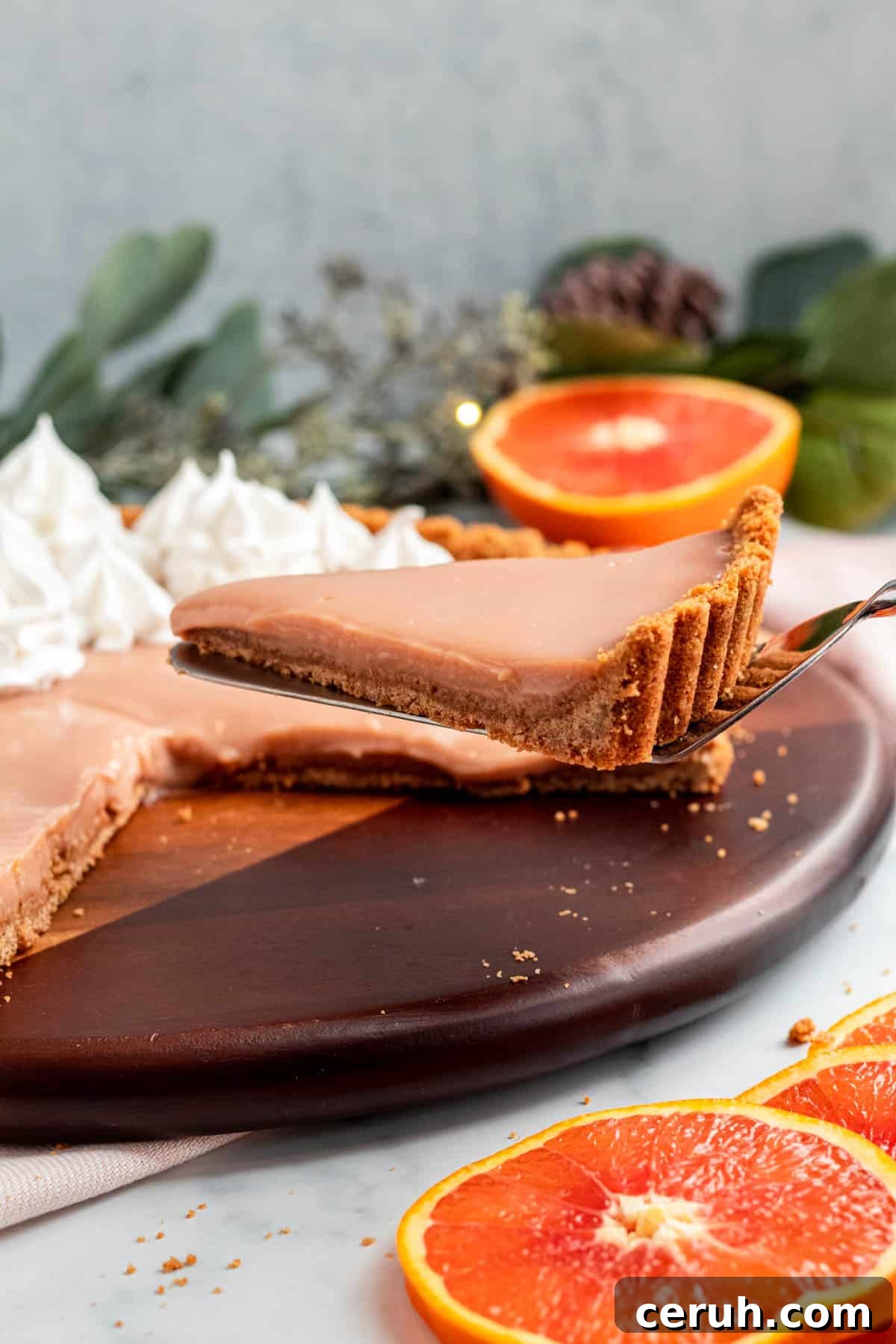
The tart begins with a fragrant cinnamon graham cracker crust. Combine graham cracker crumbs with brown sugar, melted butter and cinnamon. Press the mixture into a 9-inch removable-bottom tart pan, packing it firmly into the bottom and up the sides with the base of a cup or a flat measuring cup for even thickness.
Bake the crust at 350°F (175°C) for 8–10 minutes, until it begins to turn golden. Allow it to cool completely before adding the curd so the filling sets smoothly.
Tips for a perfectly smooth curd
Making curd can feel intimidating, but this recipe keeps the technique straightforward. Everything except the butter is whisked in a saucepan and cooked over medium-low heat. Lower heat and frequent stirring help prevent the eggs from scrambling and promote an even, glossy texture.
If small bits of cooked egg do form, don’t worry — straining the curd through a fine-mesh sieve at the end will remove any solids and leave a silky finish.
Follow these tips for reliable results:
- Use whole eggs plus yolks — This recipe uses a mix of whole eggs and additional yolks. That combination yields a curd that is rich but still light and creamy, rather than overly dense.
- Stir constantly — Cook the curd over medium-low heat and stir frequently, making sure to reach the edges so it thickens evenly without curdling.
- Strain the curd — Straining through a fine-mesh sieve is the most important finishing step to ensure smoothness.
- Use an instant-read thermometer — Aim for about 170°F (77°C) before removing the curd from the heat. Cooking past that increases the chance of scrambled egg bits. If you don’t have a thermometer, the curd should coat the back of a spoon and leave a clear line when you run your finger through it.
How to make the meringue topping
This tart is finished with a Swiss meringue, which is surprisingly simple and yields a glossy, stable topping. Use a stand mixer if possible; a hand mixer will work but will take longer.
Set a heatproof bowl over gently simmering water (the bowl should not touch the water). Add egg whites and granulated sugar, whisking constantly until the sugar dissolves — about 4–5 minutes. The mixture should reach roughly 160°F (71°C) or feel smooth to the touch with no sugar graininess.
Transfer the warmed whites to a mixer and beat on medium-high until thick, glossy and stable peaks form, about 5 minutes with a stand mixer (longer by hand).
Substitution for the meringue
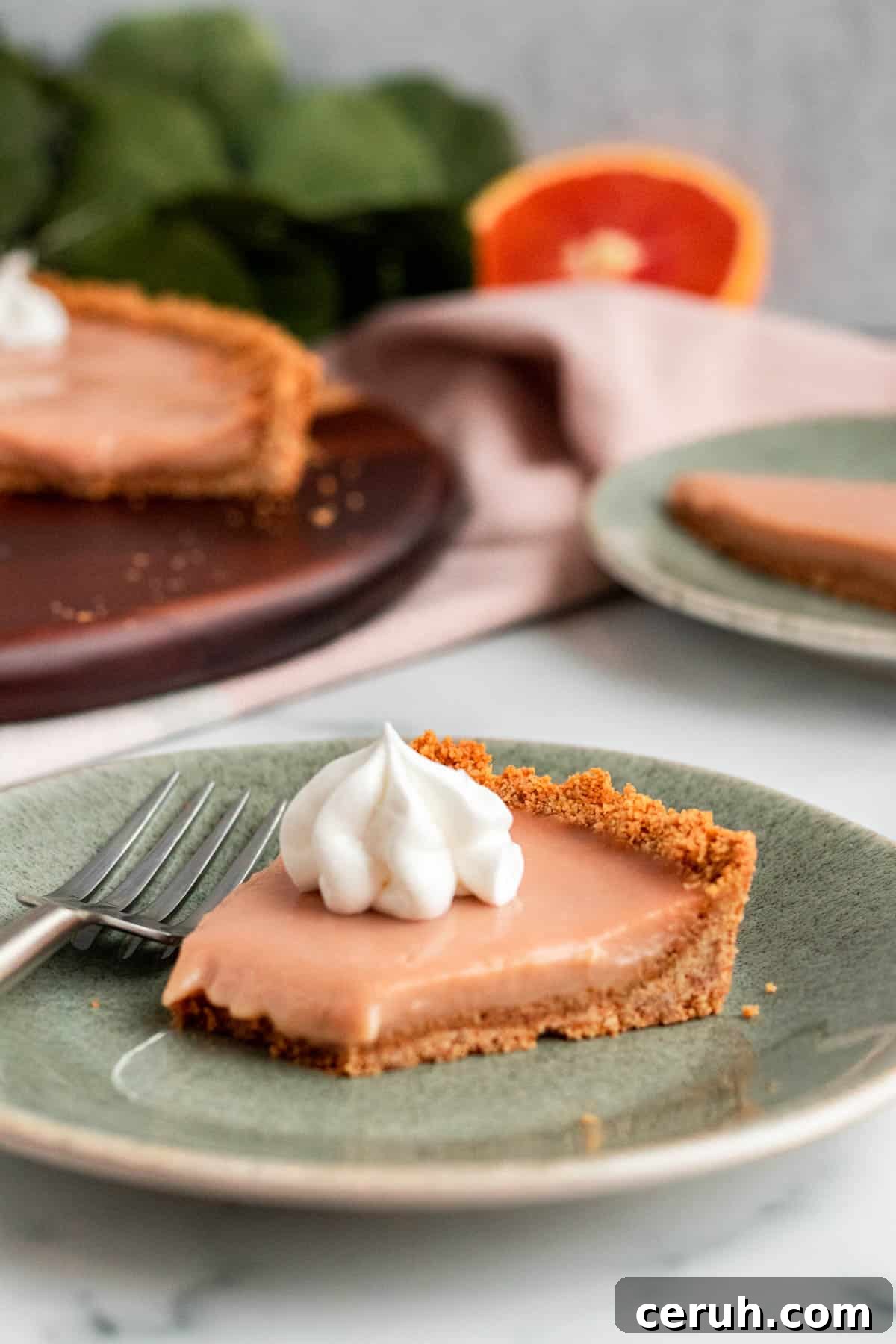
If you prefer not to make meringue, the tart is equally delicious with fresh whipped cream. Whip 1 cup cold heavy cream with 3 tablespoons powdered sugar and 1 teaspoon vanilla until stiff peaks form. Pipe or dollop as desired just before serving.
How to store the tart
Store the tart covered in the refrigerator for 1–2 days. If it’s topped with meringue, note that the meringue may weep slightly over time. For best texture, add the meringue or whipped cream just before serving when preparing the tart ahead of time.
For more sophisticated desserts, check out:
- Chocolate Mocha Cake
- Key Lime Tart
- Chocolate Pots de Crème: Two Ways
- Meyer Lemon Tarts with White Chocolate
Tag me on Instagram @themarblekitchenblog if you make this, and please leave a star rating and comment below. Enjoy!
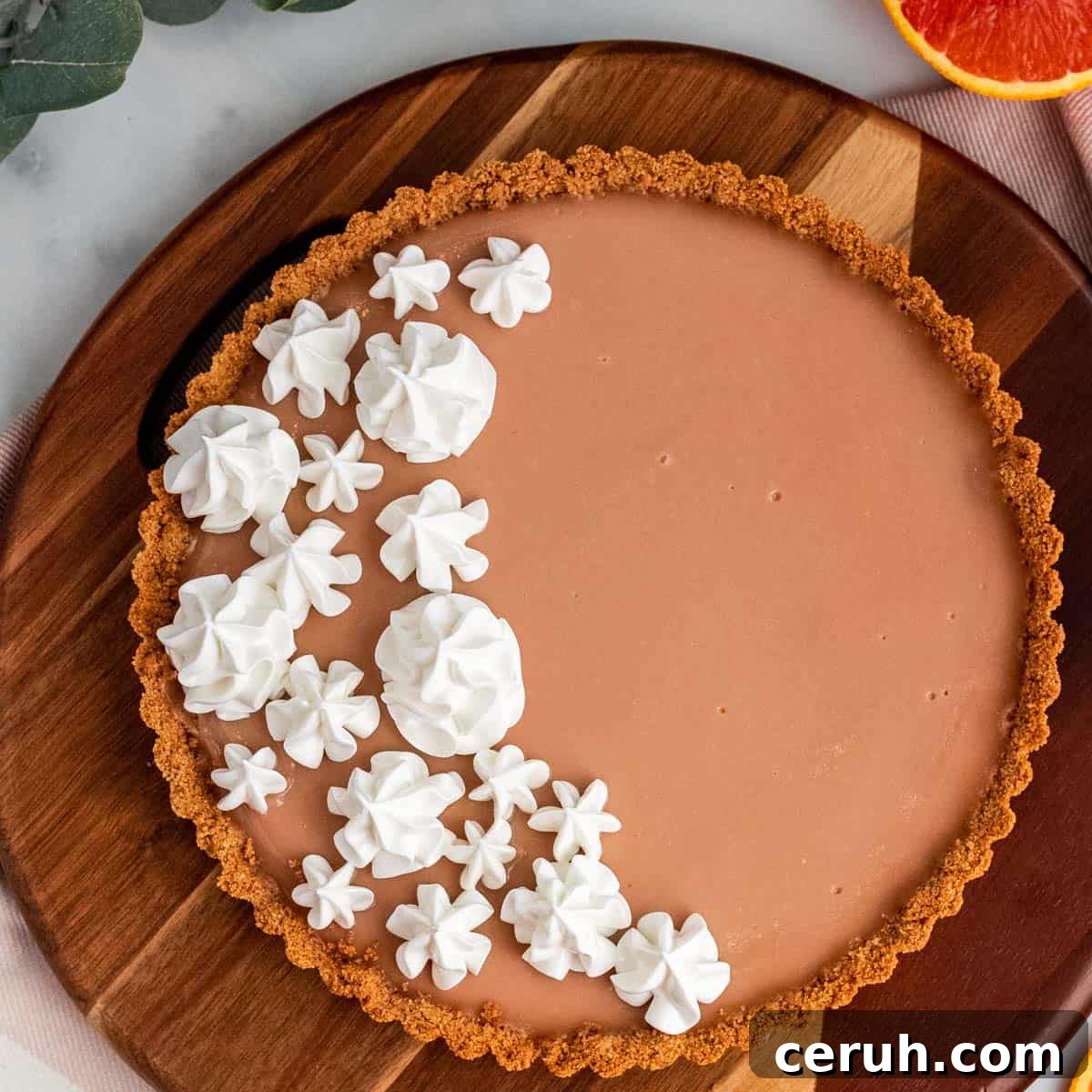
Blood Orange Tart with Meringue
Print
Pin
Rate
Ingredients
Graham Cracker Crust
- 1 ½ cups graham cracker crumbs about 14 full sheets
- ¼ cup brown sugar packed
- 6 tablespoons unsalted butter melted
- 1 teaspoon cinnamon
- ½ teaspoon kosher salt
Blood Orange Curd
- 1 cup blood orange juice about 6–8 blood oranges
- 2 tablespoons lemon juice
- ½ cup sugar
- 3 eggs
- 5 egg yolks
- 6 tablespoons unsalted butter cubed
Meringue
- 2 egg whites
- ⅓ cup granulated sugar
- 1 teaspoon vanilla
- ¼ teaspoon salt
Instructions
Graham Cracker Crust
-
Preheat the oven to 350°F (175°C).
-
Pulse graham crackers in a food processor until fine crumbs form, or crush in a zip-top bag with a rolling pin.
-
Combine crumbs with brown sugar and melted butter until the crumbs are evenly coated.
-
Press the mixture firmly into the bottom and up the sides of a 9-inch tart pan. Bake 8–10 minutes until golden. Cool completely.
Blood Orange Curd
-
Whisk the blood orange juice, lemon juice, sugar, eggs and egg yolks together in a small saucepan.
-
Cook over medium-low heat, stirring constantly, and add the butter. Continue stirring until the curd thickens and reaches about 170°F (77°C), roughly 6 minutes. Small bits of cooked egg may appear but will be removed when straining.
-
Strain the curd through a fine-mesh sieve into a bowl, discarding any solids.
-
Pour the strained curd into the cooled crust and smooth the top. Refrigerate at least 2 hours to set. Add the meringue just before serving.
Meringue
-
Set a bowl over gently simmering water (the bowl should not touch the water). Add egg whites and sugar, whisking constantly for 4–5 minutes until the sugar dissolves and the mixture reaches about 160°F (71°C).
-
Transfer to a mixer and beat on medium-high until thick, glossy and holding stiff peaks, about 5 minutes with a stand mixer (longer by hand).
Notes
- The tart keeps covered in the refrigerator for 1–2 days. If made ahead, add the meringue or whipped cream just before serving for best texture.