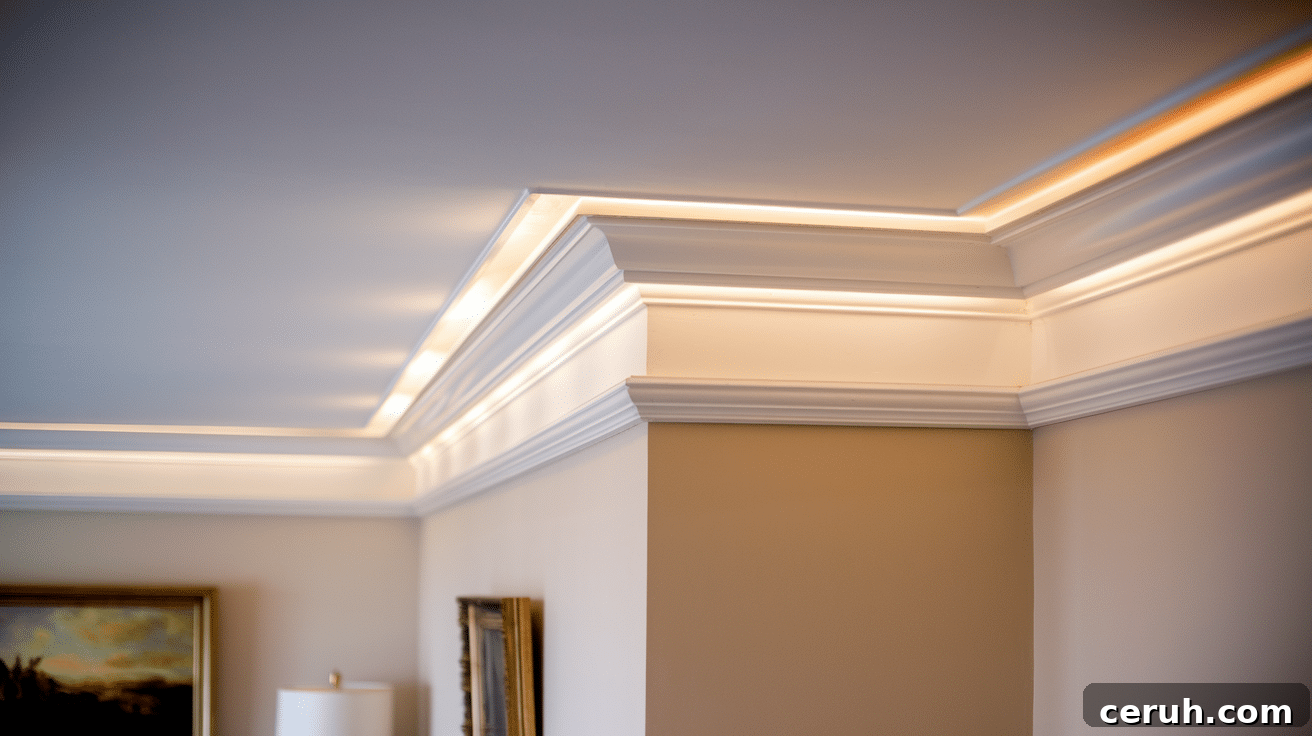
Want to give your rooms a more polished, upscale look? Installing crown molding is a relatively simple upgrade that can make a noticeable difference. This guide explains how crown molding works, what tools you need, and step-by-step instructions for measuring, cutting, installing, and finishing the molding so your space looks professionally completed.
Crown molding bridges the angle where wall meets ceiling, creating a clean transition and a finished appearance. While some homeowners assume installation is difficult, the process becomes manageable with the right tools, careful measurements, and a few helpful techniques.
Read on to learn how to choose molding profiles, prepare your room, cut accurate joints, fasten pieces securely, and apply the finishing touches that hide seams and nail holes. With patience and the right approach, you can add lasting visual appeal and potentially increase your home’s market value.
Why Install Crown Molding?
Crown molding is a cost-effective way to add character and architectural detail to any room. It helps define a space, disguises minor imperfections at the wall-ceiling junction, and gives rooms a more finished, elegant appearance. Buyers and visitors often associate molding with higher-quality finishes, so it can be a worthwhile investment.
There are many profiles and materials available—from lightweight polyurethane and MDF to traditional wood—so you can match the molding to your home’s style and budget. Whether you prefer a simple, modern profile or an ornate classical style, crown molding is a flexible design choice that enhances curb appeal and interior aesthetics.
Preparation for Installation
Before you begin, gather the essential tools and materials to ensure a smooth installation:
- Miter saw
- Coping saw
- Tape measure
- Pencil
- Stud finder
- Caulking gun
- Hammer or nail gun
- Ladder
- Level
- Sandpaper
Safety is important when working with power tools and ladders. Wear safety glasses to protect your eyes from debris and work gloves to avoid splinters. Never rush when cutting or running power tools—double-check blade settings and measurements before each cut.
Measure each wall length starting from a single corner and record measurements as you go. Make light pencil marks on the wall at regular intervals to guide placement and to mark the top edge of the molding. Use a stud finder to locate studs; fastening into studs provides the most secure hold.
Guide to Installing Crown Molding
Installing crown molding is a sequence of measuring, cutting, test-fitting, fastening, and finishing. Follow these steps to achieve clean seams and straight runs.
1. Cutting Angles and Corners
Corners require precise angle cuts. For typical 90-degree corners, set your miter saw to 45 degrees for outside corners; use coping for inside corners to produce tight, paintable joints. A miter saw gives accurate bevel and miter cuts, while a coping saw lets you follow the profile of one piece to fit against the face of the adjacent piece for inside corners.
Take your time aligning the molding against the saw fence and double-check the orientation—mistakes here cause gaps later. Remember that inside and outside corners need different cutting approaches to seat properly.
2. Dry Fit the Molding
Always dry fit each piece before fastening. Hold or clamp cut sections in position against the wall and ceiling to verify fit and alignment. Dry fitting highlights gaps, length errors, or miscut angles so you can correct them before making permanent attachments.
Adjust small discrepancies by trimming slightly, recutting and coping inside corners where needed. A careful dry fit reduces finishing work and prevents frustration during installation.
3. Attach the Molding to the Ceiling
Once pieces fit, install molding by nailing into studs or blocking. Position the molding against the wall and ceiling, and fasten it using finishing nails or a nail gun, placing nails approximately 16 inches apart and at stud locations when possible. Keep checking with a level so the molding runs straight around the room.
Apply firm pressure while nailing so the molding seats against both wall and ceiling. Work sequentially around the room, joining each new piece to the previous one and ensuring corners align tightly.
4. Finishing Touches
After installation, address nail holes, seams, and any small gaps. Fill nail holes with wood putty or spackle that matches the molding material, and apply a paintable caulk to seams where molding meets walls and ceilings. Wipe away excess caulk with a damp cloth for clean lines. Allow fillers and caulk to dry completely before sanding smooth.
Finish by priming (if needed) and painting the molding. Two thin coats of paint provide better coverage and a smoother finish than a single heavy coat.
Painting and Finishing Crown Molding
Proper painting transforms installed molding into a polished architectural detail. Start by sanding filled holes and caulked seams smooth. Apply a quality primer if you’re working with raw wood, MDF, or a material that requires a bonding layer. Once the primer dries, paint with two thin, even coats.
Use a small angled brush for crisp edges and a mini-roller for flat faces to avoid evident brush strokes. Between coats, lightly sand with fine-grit sandpaper for an ultra-smooth finish.
Tips for a professional result:
- Sand lightly between coats to eliminate imperfections.
- Use painter’s tape on adjacent walls and ceilings for sharp lines when necessary.
- Match molding color to the ceiling to visually raise a low room, or use contrast to highlight architectural detail.
- Allow adequate drying time between coats to prevent peeling or trapped brush marks.
Common Challenges & How to Solve Them
Even with careful work, some challenges commonly appear. Knowing how to address them will keep your project on track.
- Corners and tight spaces: Use coping for inside corners and trim pieces gradually in confined areas to ensure tight fits.
- Gaps and uneven joints: Small gaps can be filled with paintable caulk; larger gaps may require wood filler. Sand high spots and use thin shims behind molding where walls are recessed.
- Large rooms and long runs: Use scarf joints for long straight walls and mark studs clearly to locate secure nailing points. For high ceilings, use a stable platform rather than a single ladder.
- Different wall materials: Pre-drill plaster walls to avoid cracking and consider construction adhesive for concrete or masonry surfaces. Select nail length appropriate to the wall material to ensure a secure hold without penetration.
- Irregular older homes: Use an angle finder for non-square corners and scribe molding to follow uneven ceilings. Additional caulk and careful sanding can disguise settled or irregular joints.
Wrapping Up
Crown molding is a weekend-friendly project that delivers a strong visual upgrade for your rooms. Start with a smaller room to build confidence, measure carefully, and take extra care with corners. When challenges arise, use the techniques outlined here to correct fits and finish seams. With patience and attention to detail, you’ll add a refined touch that enhances both your daily living space and your home’s appeal.