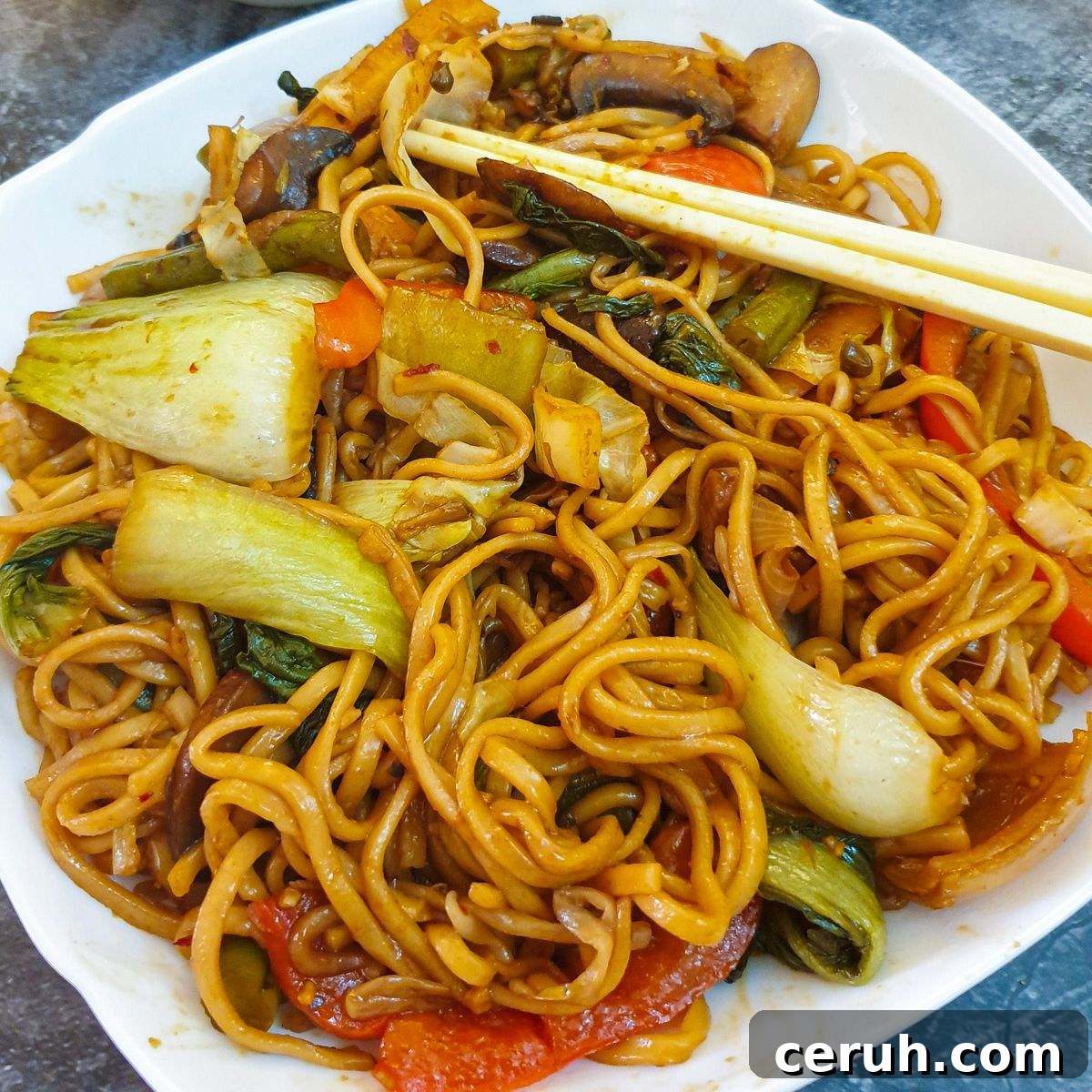
Tender noodles, crisp vegetables and a fragrant sesame sauce make this quick and easy vegetable lo mein a delicious, versatile Chinese-inspired dish. Serve it as a side or add your preferred protein for a satisfying one-bowl meal.
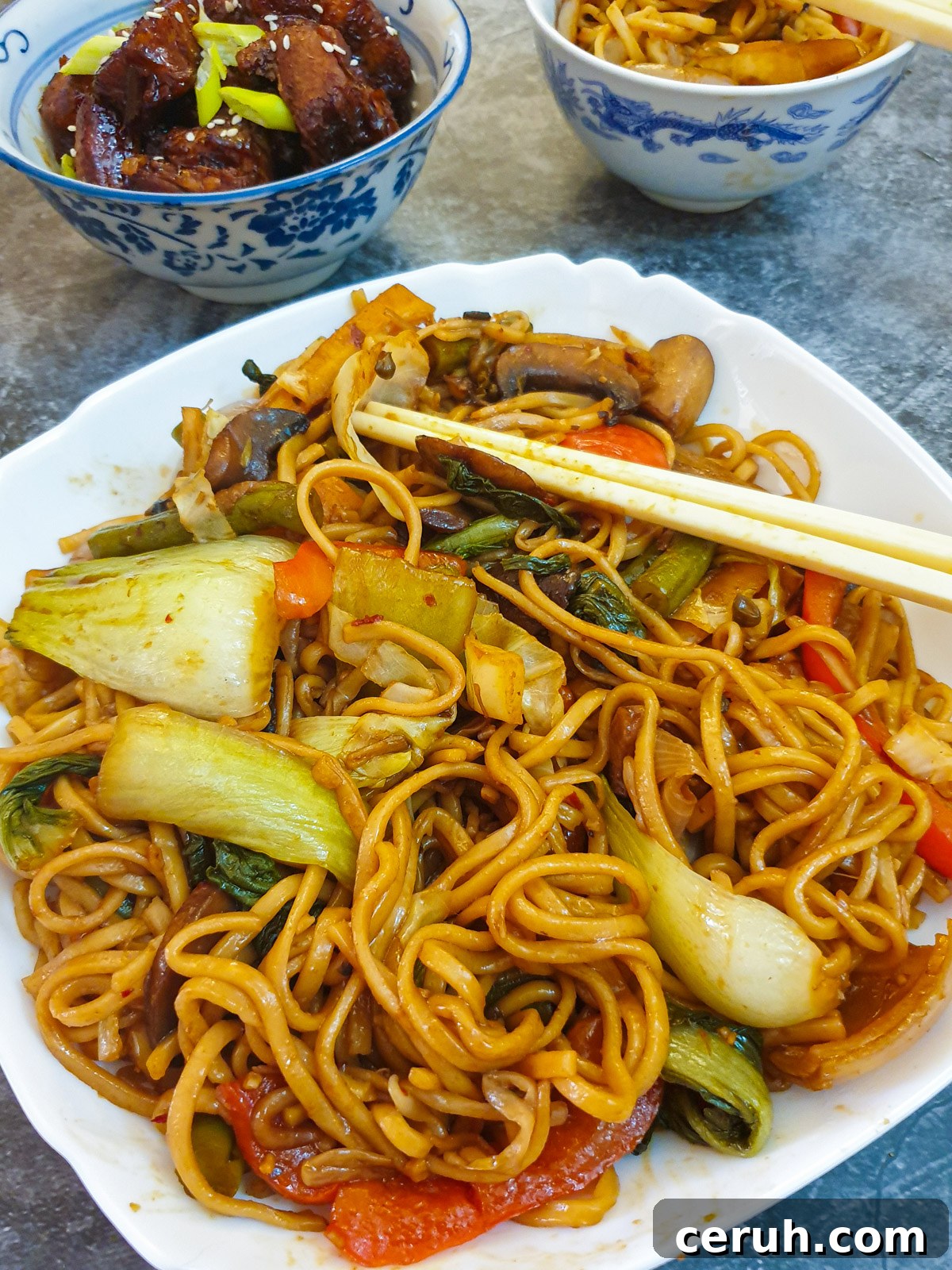
What is Vegetable Lo Mein?
Vegetable lo mein is a simple Chinese-style noodle dish of soft, tossed noodles and mixed vegetables coated in a slightly sweet, savory sauce. Vegetables are briefly steamed or stir-fried to keep them bright and crunchy while the sauce binds all the flavours together.
Why I Love This Recipe
This version is one of my favourites because:
- You can use whatever vegetables you have on hand—carrots, cabbage, pak choi, peppers, onions, mushrooms, green beans and beansprouts all work well.
- The sauce requires just a handful of pantry staples but delivers a big, balanced flavour.
- It’s healthy: vegetables are steamed in their own juices, preserving texture and nutrients.
- It’s fast — once the veg are prepped, the whole dish comes together in about ten minutes.
A typical serving is modest in calories while delivering volume from vegetables and noodles, making it a great option for lighter meals or Meatless Monday rotations.
What You Will Need
Equipment
A large wok with a lid is ideal, but a wide frying pan with a lid also works. You will also need a saucepan for boiling noodles, a sharp knife and a chopping board.
Ingredients
This recipe is flexible. The list below shows what I used; feel free to swap or omit any items to suit your pantry and taste.
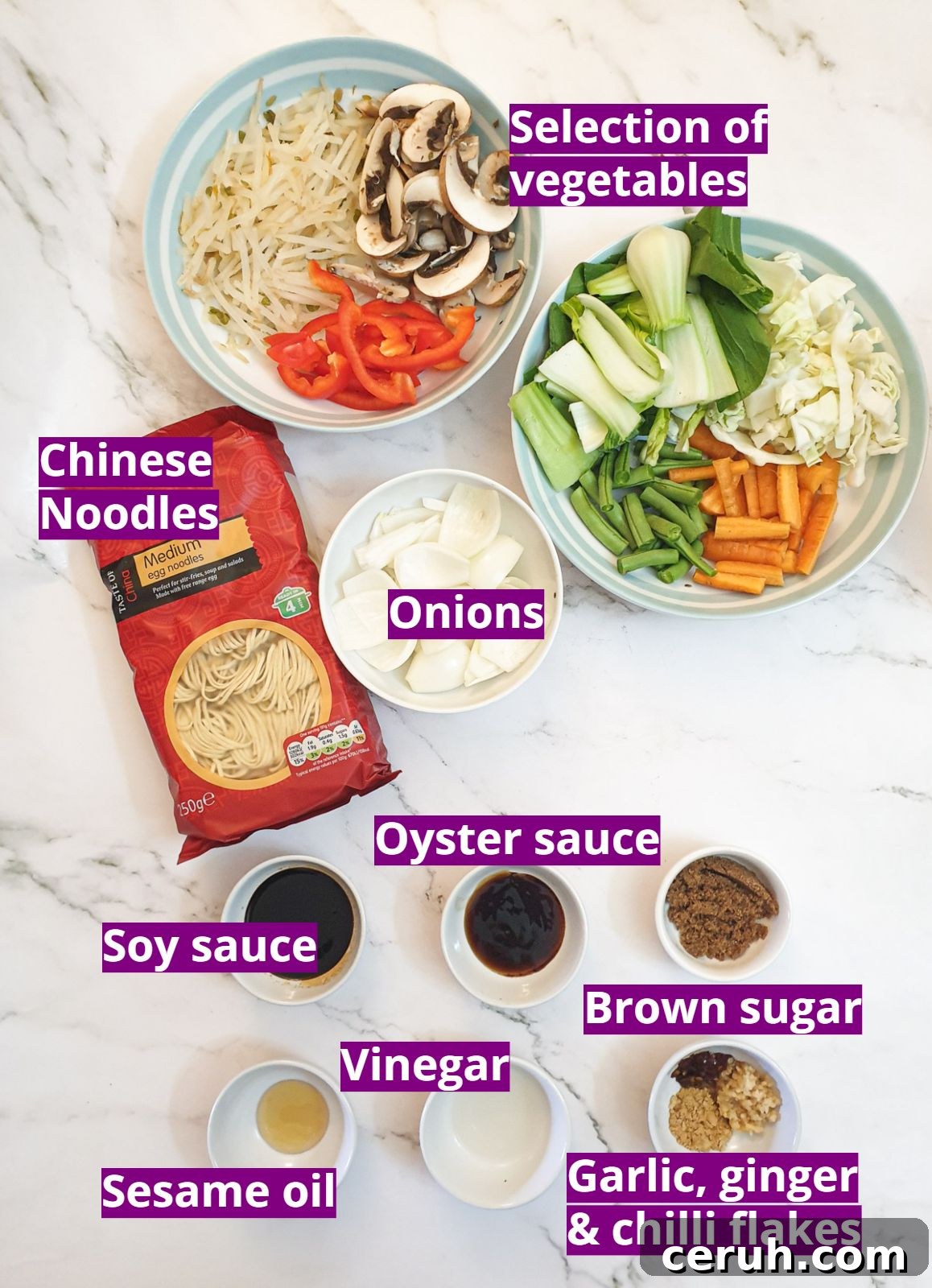
- Vegetables – Allow about 1 to 1.5 cups of prepared vegetables per person. Suggested mix: shredded cabbage, julienned carrots, sliced onion, diced red pepper, pak choi, sliced mushrooms, trimmed green beans and beansprouts.
- Noodles – 6 ounces (170 g) Chinese-style noodles (fresh or dried). If necessary, spaghetti or instant ramen can be used in a pinch.
- Aromatics – 2 cloves garlic, minced; 1 inch piece of ginger, grated or finely chopped.
- Oil – 2 tablespoons olive or sunflower oil for stir-frying.
- Sauce – 2 tbsp oyster sauce, 3 tbsp dark soy sauce, 1 tbsp brown sugar, 2 tbsp rice wine vinegar (or substitute dry sherry/Shaoxing), 1 tsp sesame oil.
- Optional – ½ tsp dried chilli flakes or a pinch of cayenne for heat.
Method
Preparation
Good prep makes this dish quick to finish. Chop everything to similar sizes so the vegetables cook evenly.
- Shred cabbage; slice onions and mushrooms; cut carrots into matchsticks; trim and cut green beans into bite-size pieces; coarsely chop pak choi; rinse and drain beansprouts.
- Peeled and mince the garlic; grate or finely chop the ginger.
- Mix the sauce in a small bowl: oyster sauce, dark soy sauce, brown sugar, rice wine vinegar and sesame oil. Stir until the sugar dissolves and set aside.
- Cook the noodles in a saucepan of boiling salted water according to packet directions (about 7 minutes for many dried noodles). Drain and rinse under cold water to stop cooking. Drain well.
Cook the Lo Mein
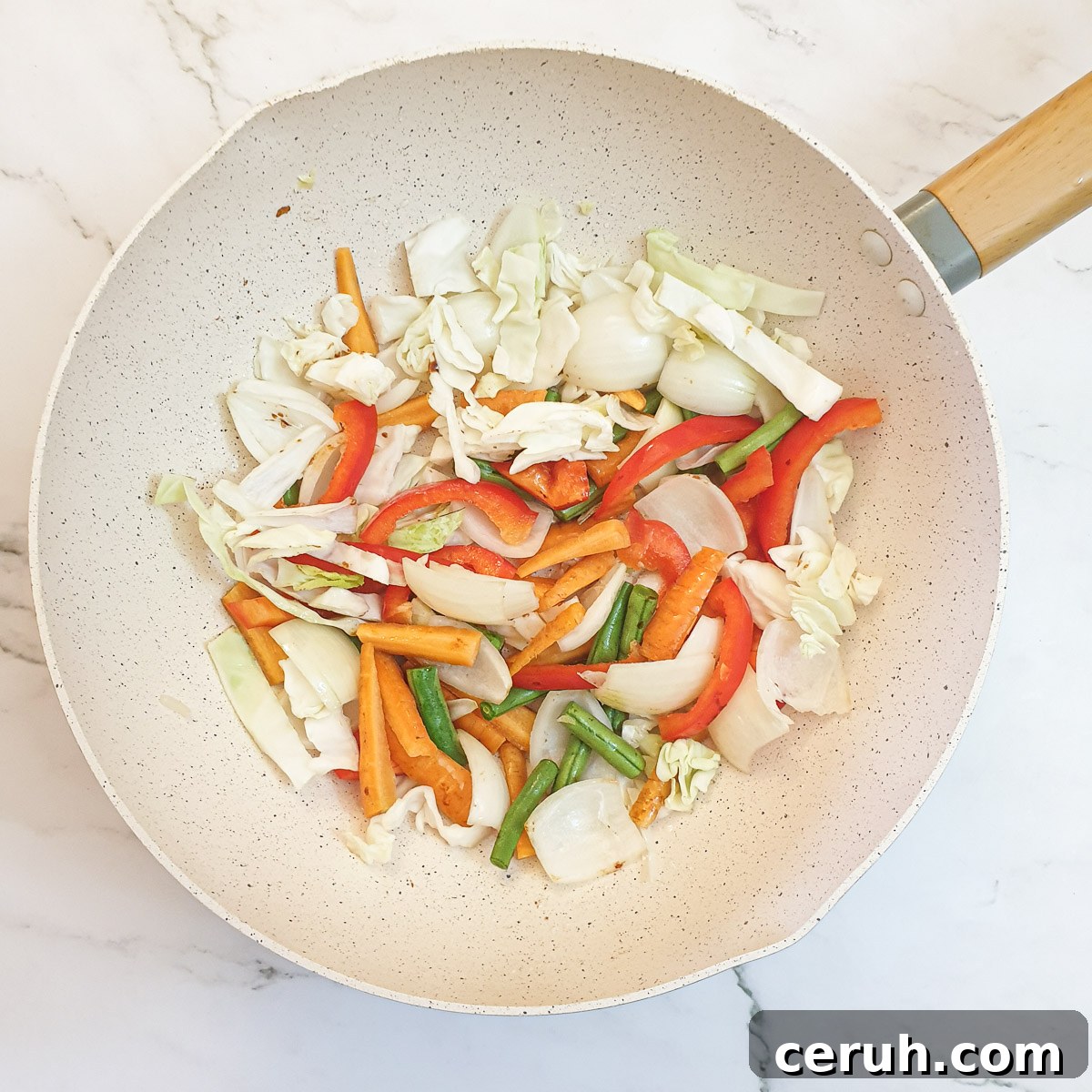
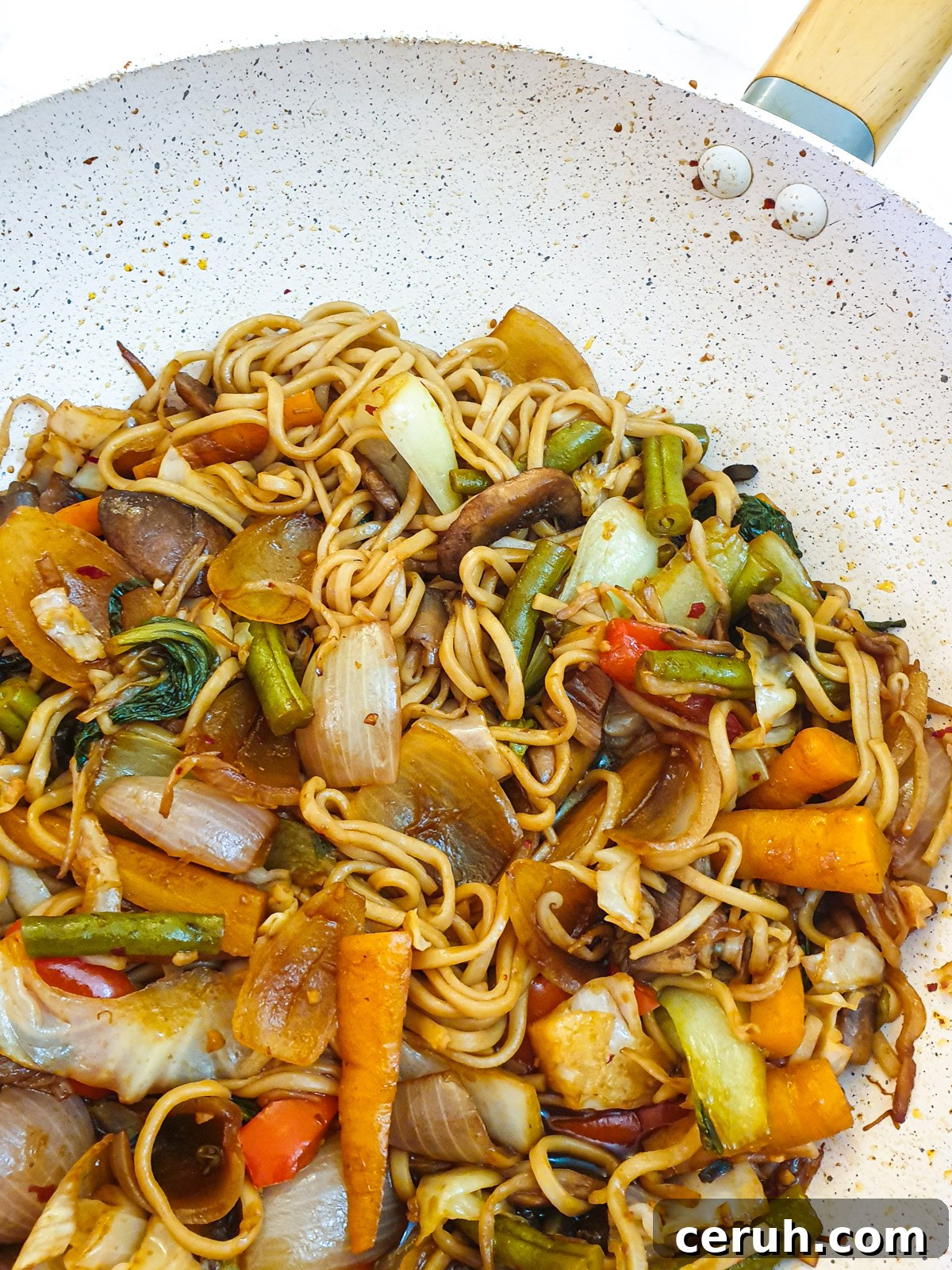
Heat the oil in a wok or large frying pan. Add the onions, garlic, ginger, chilli (if using), red pepper, carrots, green beans and cabbage. Stir-fry briefly to coat the vegetables in oil.
Turn the heat down to low, add 1 tablespoon of water, cover and steam for about 5 minutes so the vegetables soften while retaining some bite.
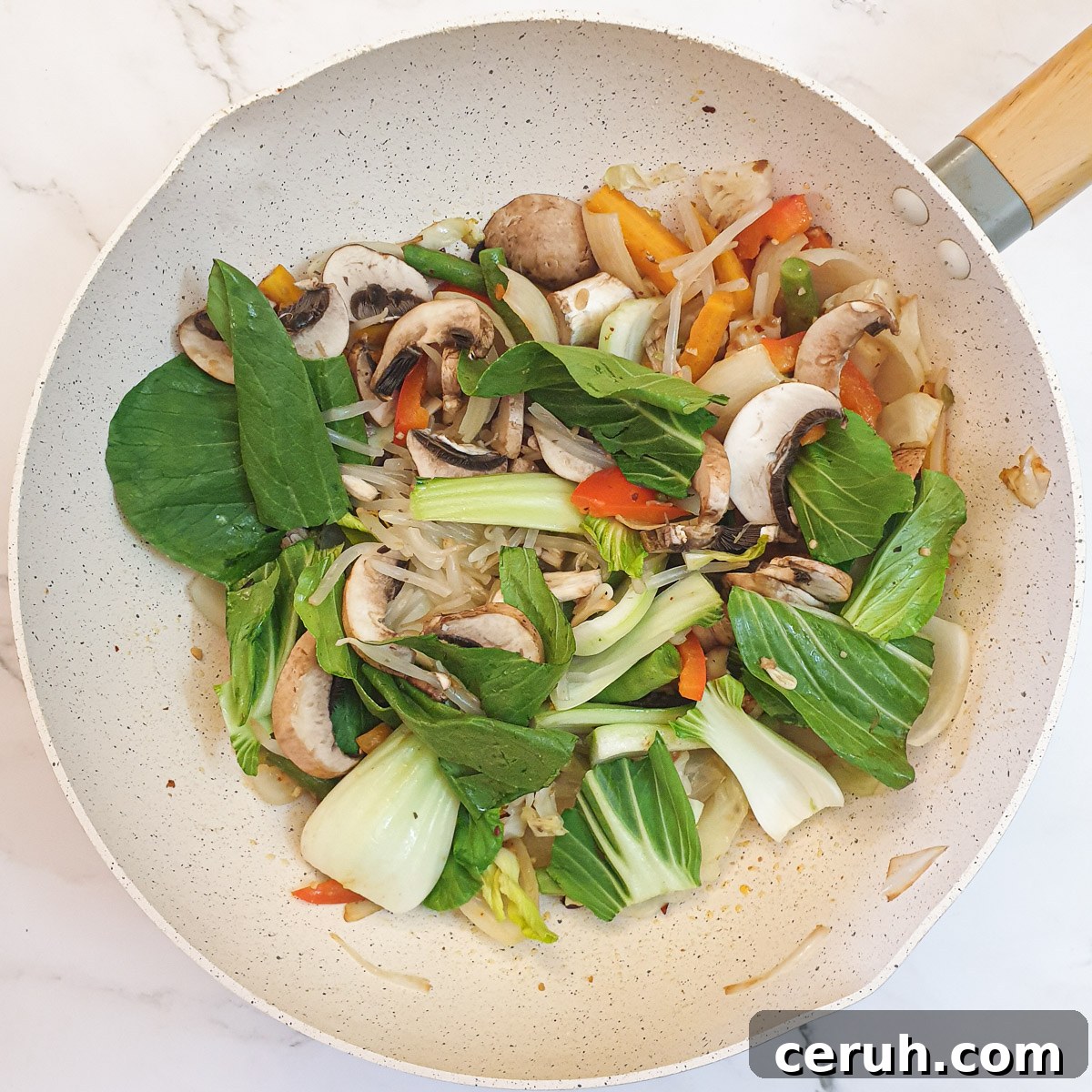
Add the quicker-cooking vegetables—pak choi, mushrooms and beansprouts—then replace the lid and steam for 3–4 minutes.
Check the texture and steam a little longer if needed. If the pan looks dry while steaming, add another tablespoon of water.
Keep the vegetables moist from the steaming; they should retain some liquid so the sauce will coat them evenly.
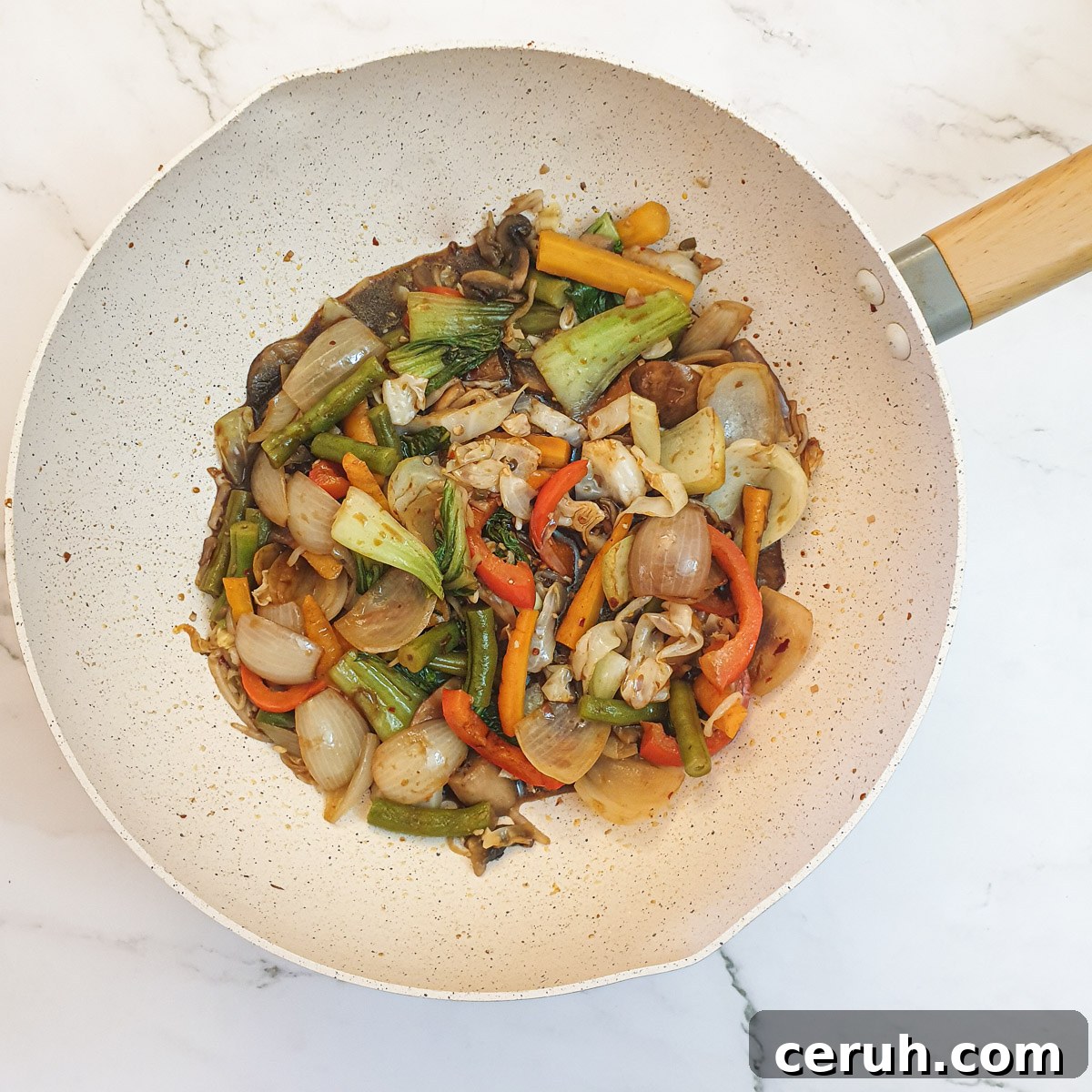
Pour in the prepared sauce, stir to combine and bring it briefly to the boil so it coats the vegetables. Taste and adjust seasoning — soy sauce usually provides enough salt.
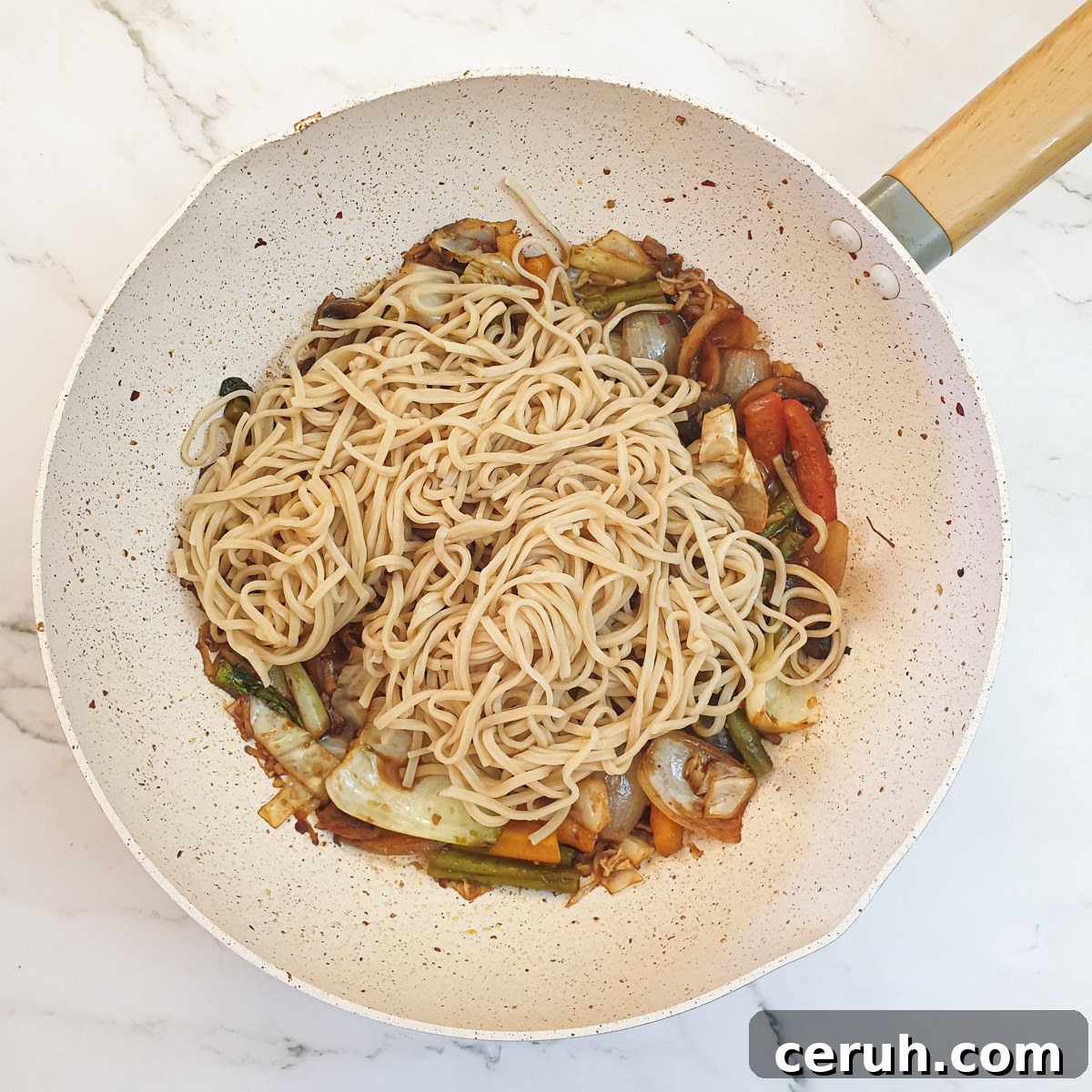
Add the drained noodles and toss them through the vegetables and sauce. Stir gently over low heat until the noodles are warmed through and everything is evenly coated.
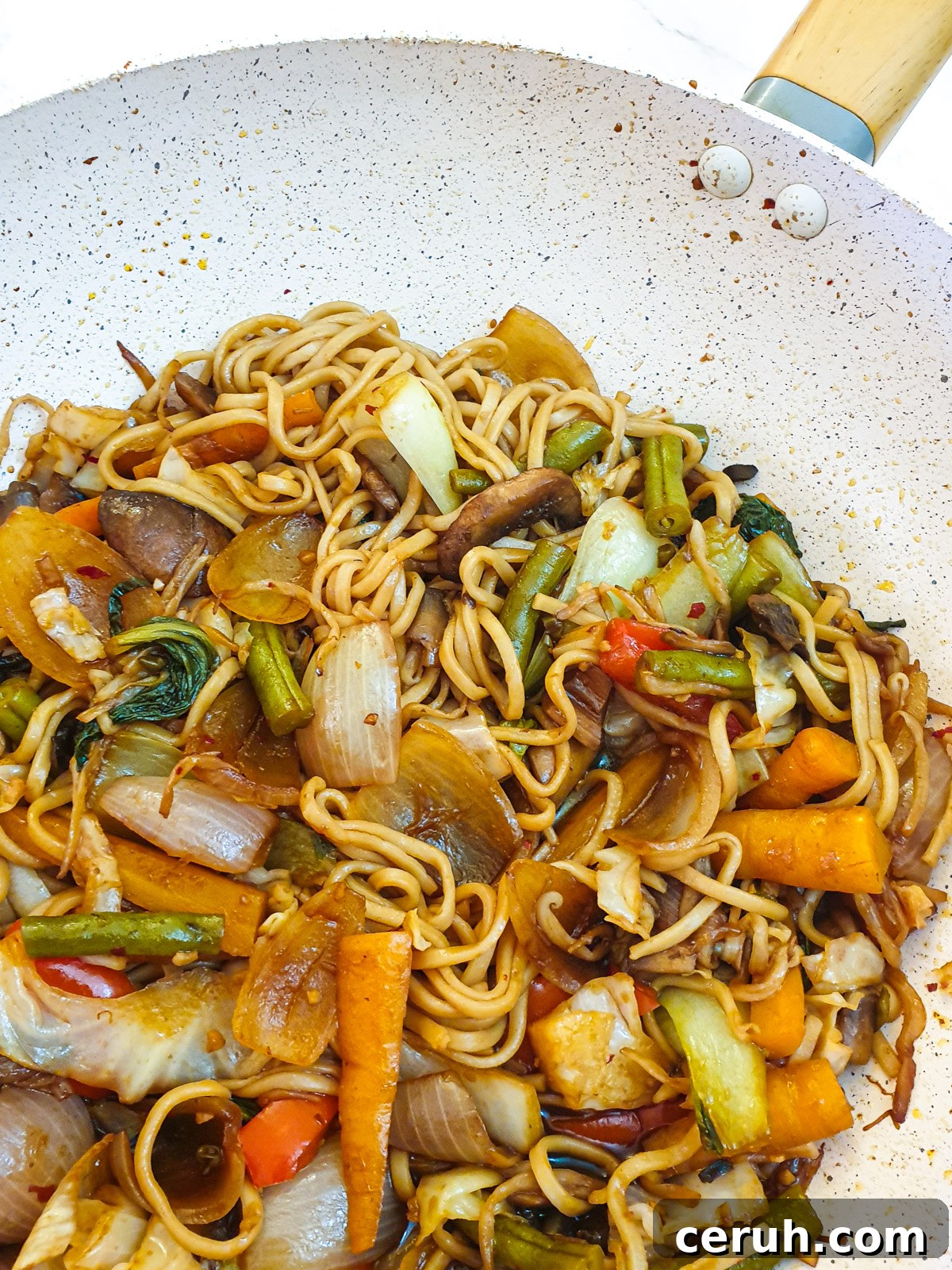
Transfer to a serving dish and serve immediately while hot and glossy.
Can I Add Protein?
Yes—prawns, chicken, pork or beef all pair nicely. Plan on about 90 g (3 oz) of protein per person. Cook the protein separately during prep and stir it through the noodles at the end so it stays tender.
Prawns
Use fresh or previously frozen prawns that are peeled and deveined. Sear in a little butter or oil until pink, about 3–4 minutes, then set aside to add to the finished lo mein.
Chicken, Pork or Beef
Slice the meat into thin, bite-sized strips. For quick cooking choose tender cuts: chicken breast or thigh, pork tenderloin or fast-cooking steak for beef.
For a silky exterior, toss the strips in a light coating of cornflour (cornstarch) mixed with soy sauce and let them rest for 10 minutes before stir-frying until just cooked through. Remove and add back in with the noodles at the end.
Freezing and Storage
Technically you can freeze lo mein for up to 4–6 months, but reheated frozen lo mein often loses vegetable crunch and fresh texture. Because this recipe is quick to make, I recommend preparing it fresh when possible.
The Recipe
Vegetable Lo Mein
Tender noodles, crunchy vegetables and a sesame-flavoured sauce combine to make a quick, tasty dish. Serve as a side or add protein for a complete meal.
Ingredients (serves 4)
- 1 medium onion, finely sliced
- 2 small carrots, julienned
- ½ small cabbage, shredded
- 12 green beans, sliced
- 1 small red pepper, diced
- 3 oz (85 g) mushrooms, sliced
- 1 small pak choi, coarsely chopped
- 3 cups beansprouts, rinsed
- 2 cloves garlic, minced
- 1 inch piece ginger, grated
- ½ tsp dried chilli flakes (optional)
- 2 tbsp olive or sunflower oil
- 6 oz (170 g) Chinese noodles
Sauce
- 2 tbsp oyster sauce
- 3 tbsp dark soy sauce
- 1 tbsp brown sugar
- 1 tsp sesame oil
- 2 tbsp rice wine vinegar (or dry sherry/Shaoxing)
Method
- Prepare all vegetables and aromatics so they are ready to go.
- Mix the sauce ingredients in a small bowl; set aside.
- Cook noodles in boiling salted water until just tender. Drain, rinse with cold water and drain well.
- Heat oil in a wok or large pan. Stir-fry onions, garlic, ginger, chilli (if using), carrots, red pepper, beans and cabbage to coat. Reduce heat, add 1 tablespoon water, cover and steam about 5 minutes.
- Add pak choi, mushrooms and beansprouts. Replace lid and steam 3–4 minutes until vegetables reach desired tenderness.
- Add the sauce and bring briefly to the boil, then add the noodles and toss to combine. Taste and adjust seasoning.
- Warm everything through over low heat, transfer to a serving dish and serve immediately. Add pre-cooked protein if using.
Notes
Estimate nutrition will vary depending on vegetables and any added protein. For a spicier dish add more chilli, or finish with a drizzle of extra sesame oil for a richer aroma.
Nutrition (approx. per serving)
Calories: 487; Carbohydrates: 55 g; Protein: 9.6 g; Fat: 27.7 g; Fiber: 5.9 g. These are estimates and will vary by exact ingredients and portion sizes.
If you try this recipe, I hope you enjoy it. Feel free to adapt the vegetables and seasoning to suit your taste — that flexibility is what makes lo mein such a great weeknight dish.