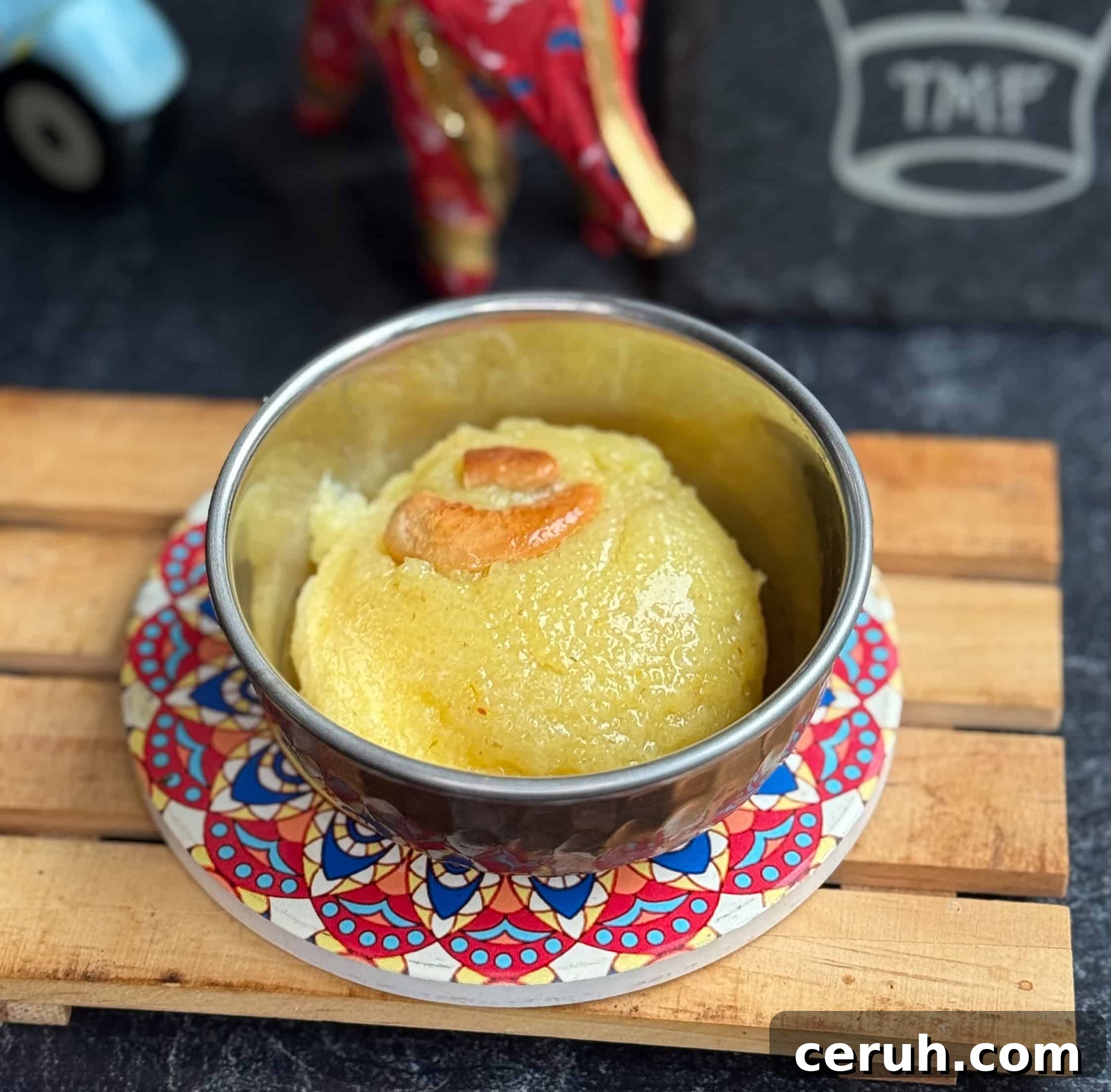
Paal Kesari, milk kesari, kesari bath, rava kesari, how to make paal kesari, kesari recipe, South Indian sweets, milk rava kesari, easy kesari recipe, festival sweets, ghee kesari, saffron kesari, semolina dessert, Indian sweet recipes, paal kesari without water, traditional kesari bath with clear step-by-step pictures and a video demonstration. Watch the milk Kesari video recipe and subscribe to the channel if you enjoy the video.
Kalyana Kesari recipe is a classic South Indian sweet often served at weddings and special occasions. Its slightly different proportions and preparation give it a rich, melt-in-the-mouth texture that many hotels and caterers reproduce for festive menus.
Paal kesari
Paal Kesari, also called Milk Kesari or Kesari Bath, is a creamy South Indian dessert made from semolina (rava), milk, ghee, sugar and saffron. Cooked fully in milk, it has a silky, rich consistency and a fragrant flavor. It’s quick to prepare and works well for celebrations, prasad or whenever you crave a comforting sweet.
Secret for Kalyana Kesari
Professional wedding kesari often tastes different because of a few key choices: roasting the rava until aromatic, using a slightly higher sugar ratio, adding ample ghee (about half the volume of rava) and including a small amount of oil to prevent sticking. These steps contribute to a soft, halwa-like finish.
What is Paal Kesari?
Paal Kesari is a South Indian sweet prepared with semolina (rava) cooked entirely in milk, then sweetened and flavored with ghee, saffron and cardamom. The result is a creamier, more luxurious version of regular rava kesari.
How is Paal Kesari different from regular Kesari Bath?
Regular kesari bath is traditionally made with water, while paal kesari uses milk as the primary liquid. Cooking in milk yields a softer, richer texture and a more comforting mouthfeel.
Can I make Paal Kesari without saffron?
Yes. Saffron adds aroma and a delicate flavor, but you can substitute a pinch of turmeric or a small amount of food color for the golden hue if needed. Flavor will be slightly different without saffron.
Why does my Kesari turn lumpy?
Lumps often form when rava is added too fast or when it isn’t stirred continuously while absorbing liquid. Add rava gradually and stir well to keep the mixture smooth and lump-free.
How long does Paal Kesari stay fresh?
Paal Kesari is best eaten fresh. It keeps for about 1 day at room temperature and 2–3 days refrigerated. Reheat gently with a splash of milk to restore its soft texture.
How to achieve lump-free paal Kesaribath?
A little oil and ground sugar help prevent lumps. If you roast the rava properly and add milk slowly while stirring, you won’t need to forcefully break lumps—the mixture will come together smoothly with gentle mixing.
Can I cook Rava in water, then add milk?
Yes, you can, but cooking entirely in milk gives a richer taste. Using water first will change the final flavor and texture.
Will the milk Kesari smell oily?
No. Use a neutral-flavored oil and good quality ghee; the final aroma should be pleasant and buttery rather than oily. The ghee contributes most of the characteristic fragrance.
Can I add rose essence?
Paal Kesari traditionally pairs best with saffron and cardamom. Strong floral essences can overshadow the delicate flavors, so they are generally not recommended.
Ingredients
To pulse
1/2 cup sugar (heaped)
Few strands of saffron
Pinch of cardamom powder
To roast
1 tbsp ghee, cashews
For Kesari
1/4 cup rava
1 + 1/4 cup hot milk
2 tbsp ghee
1/2 tsp flavourless oil
How to make paal kesari with step-by-step pictures
- Add the ingredients listed under “To pulse” into a blender or mixie and grind to a fine powder.
- Heat 1 tablespoon ghee in a pan and roast the cashews until golden. Remove and keep aside.
- In the same pan, roast the rava on medium heat until it becomes aromatic; do not let it brown too much.
- Carefully add 1 cup of hot milk to the roasted rava, stirring continuously to avoid lumps.
- Cover the pan and cook on low heat until the rava absorbs the milk and is cooked through.
- Add 1 tbsp ghee, 1/2 tsp oil and the remaining 1/4 cup hot milk; mix well.
- Stir in the ground sugar, saffron and cardamom powder. Cook while stirring until the mixture comes together into a soft, cohesive mass.
- Fold in the roasted cashews, turn off the heat and let the Kesari rest for a few minutes before serving.
paal kesari
Ingredients
To pulse
- 1/2 cup sugar (heaped)
- Few strands of saffron
- Pinch of cardamom powder
- To roast: 1 tbsp ghee, cashews
For Kesari
- 1/4 cup rava
- 1 + 1/4 cup hot milk
- 2 tbsp ghee
- 1/2 tsp flavourless oil
Instructions
- Add the ingredients under “To pulse” into the mixer and grind to a fine powder.
- Heat 1 tbsp ghee and sauté the cashews until golden. Keep aside.
- In the same pan, roast rava until aromatic.
- Add 1 cup of hot milk and mix well, stirring continuously to avoid lumps.
- Cover and cook until the rava is fully cooked.
- Add 1 tbsp ghee, oil, and 1/4 cup hot milk; mix well.
- Add the ground sugar mixture, stir and cook until it comes together as a soft mass.
- Finally, fold in roasted cashews and turn off the stove. Let rest briefly before serving.