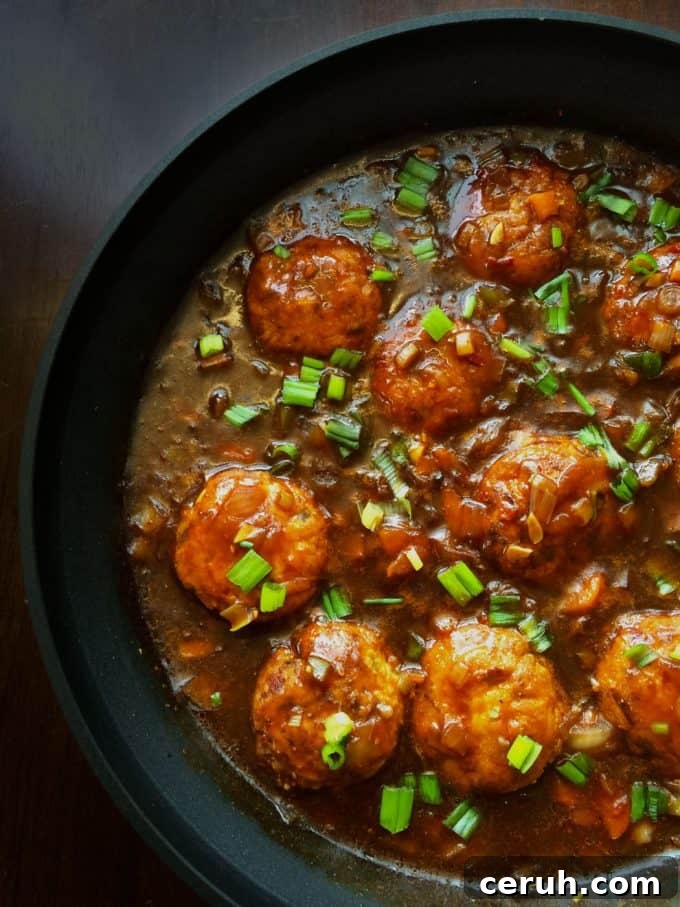
Veg Manchurian is a beloved Indo‑Chinese dish we often order at restaurants. Traditionally it features vegetable dumplings that are deep‑fried and tossed in a sweet and spicy sauce. This recipe offers a healthier alternative: no frying, yet all the flavor and texture you expect from manchurian.
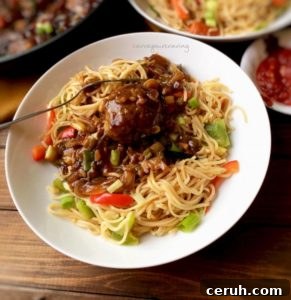
There are two common versions of Manchurian: a dry version served as an appetizer, and a gravy version with dumplings in a sweet‑and‑sour sauce. Here I share a wholesome, vegan and gluten‑free take on the gravy version—Easy No‑Fry Veg Manchurian Gravy. Serve it with steamed rice or hakka noodles for a satisfying meal.
Many friends say this homemade version tastes better than the restaurant style. The dumplings are soft and melt‑in‑the‑mouth, and the gravy is packed with classic Indo‑Chinese flavors.
Veg Manchurian gravy pairs beautifully with steamed or fried rice and hakka noodles, though it’s delicious on its own as well.
Quick comparison
Restaurant style vs my healthier version.
Restaurant Manchurian is generally deep‑fried and often relies on all‑purpose flour, cornflour and sometimes MSG. My version avoids deep frying and uses a paniyaram/appe pan to cook the balls with only a light brush of oil. It contains no MSG, no all‑purpose flour and no cornflour. Instead it uses poha (beaten rice) or steamed rice and rice flour as binders. The rice or poha keeps the dumplings soft and juicy while making them gluten‑free.
The health benefits alone are worth trying this version, and there’s another advantage:
You can make the manchurian balls ahead of time, making this recipe great for potlucks or gatherings. The balls keep in the refrigerator for up to 3 days and freeze well for up to 2 months, saving time on the day you serve them.
Below is a clear, step‑by‑step recipe with notes to help you succeed.
Highlights
Vegan
Gluten free
Easy
Delicious
Healthy version
How to make Indo Chinese veg manchurian?
Print recipe
No fry Vegan and Healthy Veg Manchurian – indo chinese
Ingredients
- For the Manchurian balls
- 2 cups finely chopped vegetables (mix of carrot, cauliflower, bell pepper, beans, cabbage)
- ¼ cup grated carrot
- ½ cup grated or processed cauliflower
- ½ cup finely chopped or pulsed bell pepper
- 5-6 french beans, finely chopped or pulsed
- ¼ cup finely chopped or pulsed cabbage
- ¼ cup plus 1 tbsp poha (beaten rice) or ½ cup cooked rice
- 1 tablespoon rice flour
- 2 teaspoon soy sauce
- ½ teaspoon chili sauce
- 1 teaspoon grated garlic or garlic paste
- 1 teaspoon grated ginger or ginger paste
- ¼ teaspoon black pepper
- Salt to taste
- For the gravy
- 1 tablespoon cooking oil
- 1 cup finely chopped onion or shallots
- ½ cup chopped bell pepper (red or green)
- ½ cup chopped spring onions
- 2 tablespoon finely chopped garlic
- 2 teaspoon grated ginger
- 3 tablespoon soy sauce
- 1 tablespoon green or red chili sauce
- 1 teaspoon honey, sugar or agave
- 2 teaspoon tomato ketchup
- 2 teaspoon vinegar
- 1.5 cups water
- 1 tablespoon rice flour (for slurry)
- Salt to taste*
- ½ teaspoon black pepper
- Handful of chopped spring onion greens for garnish
Instructions
-
Place poha (beaten rice) in a colander and rinse well under running water. Cover and let it sit for about 10 minutes to soften and expand.
-
While the poha softens, finely chop or pulse the vegetables in a food processor so they are small and even.
-
Combine the vegetables, softened poha (or cooked rice), rice flour and the seasonings (soy sauce, chili sauce, garlic, ginger, pepper and salt) in a bowl.
-
Form lime‑sized balls from the mixture. They should be smooth and soft but firm enough to hold together; add 1–2 tablespoons of flour if needed. At this point you can deep‑fry them if you wish, or cook them in a paniyaram/appe pan.
-
To cook in a paniyaram pan: heat the pan and brush each cavity lightly with oil. Place the balls in the cavities and cook on low‑medium heat for 5–6 minutes, rotating halfway, until golden brown. Remove and keep aside.
-
For the gravy: heat oil in a heavy‑bottomed pan over medium heat. Add ginger and garlic and sauté for about 30 seconds, then add onions and bell peppers and cook briefly. Stir in the soy sauce, chili sauce, ketchup, vinegar and honey (or sugar). Add 1 cup water and black pepper and bring to a simmer.
-
Whisk 1 tablespoon rice flour with ½ cup water to make a slurry. Slowly add this slurry to the simmering gravy while whisking to avoid lumps. The gravy will thicken within a minute. Turn off the heat and taste; adjust salt as needed.
-
Just before serving, warm the gravy and add the manchurian balls, coating them well. Garnish with spring onion greens and serve piping hot with rice or noodles.
Notes
Nutrition
Adjust the spice to your preference. This recipe rates around a 3 on a 1–5 spice scale, where 1 is mild and 5 is very spicy.
Brands used (optional)
Any brand works; here are some products I used when developing the recipe: a paniyaram/appe pan, dark soy or tamari, green chili sauce, rice vinegar and thin noodles for serving. Use low‑sodium soy if you prefer.
No paniyaram pan? No problem
If you don’t own a paniyaram pan, flatten the balls into small tikkis and shallow‑fry them on a nonstick skillet, brushing lightly with oil until golden. You can also bake them: 400°F (200°C) for 20 minutes, flipping halfway. For extra browning, broil for 1–2 minutes per side—watch carefully to avoid burning.
How to bake manchurian?
Bake at 400°F / 200°C for about 20 minutes, flipping halfway. To achieve a golden top, move the tray to the top rack and broil on high for 1–2 minutes per side—monitor closely so they don’t burn.
You might also like:
easy hakka noodles.
healthy chilly garlic noodles in sesame pepper sauce.
teriyaki paneer stir fry.
Hope you enjoy this recipe—give it a try and share feedback in the comments. Happy cooking!
If sharing, please link back to the original post. Reproducing or copying pictures or text without credit is a copyright violation.
Thanks for stopping by.