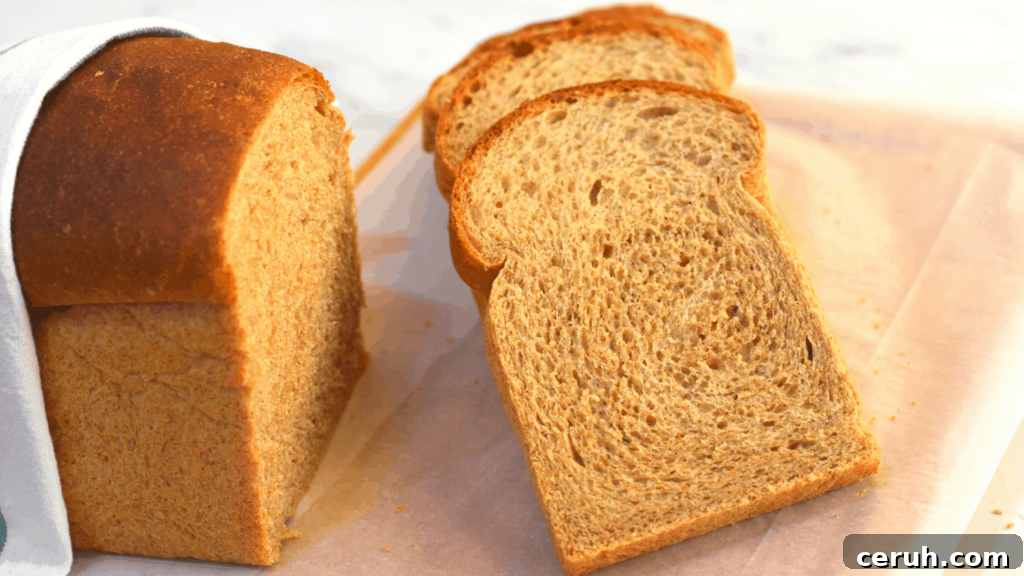
This brown bread, also known as whole wheat or wholemeal bread, is a nourishing and delicious homemade loaf. It’s soft, flavorful and packed with the nutrients of whole grain wheat—the bran, germ and endosperm—providing fiber, vitamins and minerals.
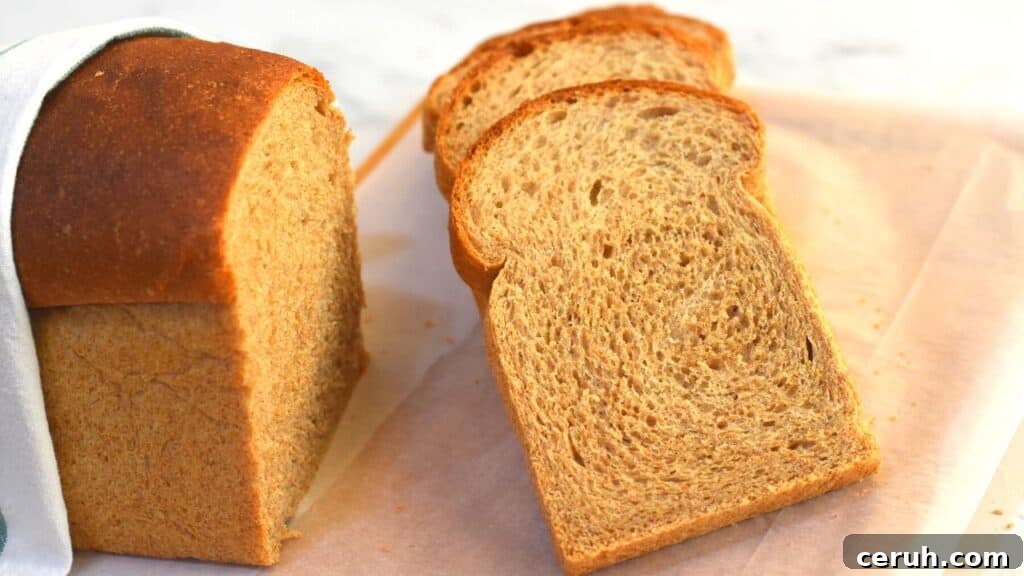
How to make fluffy whole wheat bread
Whole wheat and white breads are made with similar techniques, but whole wheat flour behaves differently. Whole wheat includes the bran and germ, which affect gluten development and the dough’s ability to trap gas. For a soft, fluffy loaf you need a fairly strong whole wheat flour that develops good gluten. If your flour feels weak and the dough isn’t elastic after about 10 minutes of kneading, you can either knead longer or add a portion of bread or all-purpose flour. A useful ratio to try is 257 g whole wheat + 100 g all-purpose flour.
When you hydrate and knead flour, gluten proteins (glutenin and gliadin) combine to form gluten. Gluten creates the dough’s elasticity and the chew and structure of the finished bread. If your dough isn’t elastic and stretchy after sufficient kneading, continue kneading or modify the flour mix for a lighter crumb.
Ingredients
- Whole wheat flour: 357 g (about 2 3/4 cups)
- Lukewarm water: 236 ml (1 cup) — adjust slightly by flour brand
- Honey or sugar: 2 tbsp (42 g honey or 25 g sugar)
- Salt: 6 g (1 tsp)
- Butter: 43 g (3 tbsp), softened
- Instant yeast: 4.5 g (1 1/2 tsp). If using active dry yeast, use 1 3/4 tsp and dissolve fully in water before adding flour.
Method
1. Prepare the dough
Pour lukewarm water into a bowl (not hot, just warm). Stir in honey (or sugar), yeast and salt until dissolved. Add the softened butter and whole wheat flour, mixing until a shaggy dough forms. Turn the dough onto a clean surface and knead for 10–12 minutes until soft and elastic. Kneading time will vary by flour type; weak flours may need longer or partial substitution with bread/AP flour.
2. First proof
Lightly oil a clean bowl, place the dough inside and coat the surface with a little oil. Cover with plastic wrap and let rise 60–90 minutes, until doubled. Proofing time depends on room temperature—warmer rooms speed it up, cooler rooms slow it down.
3. Shape the dough
After the first rise, gently deflate the dough and flatten it into a rectangle about the width of your loaf tin. Roll it into a log and place it seam-side down into a well-greased loaf tin. Cover loosely with greased plastic wrap so the dough can rise above the rim without sticking.
4. Second proof
Proof the shaped dough for about 45 minutes, or until it has risen to roughly 3/4 the height of the pan. When it reaches that height, preheat the oven to 350°F (175°C).
5. Bake
Bake at 350°F for 32–35 minutes. Around 25 minutes in, tent the top with aluminum foil if the crust is browning too quickly. Remove from the tin after baking and cool on a rack before slicing.
Example pan used: Pullman-style tin that yields a tall, medium sandwich loaf (approx. 7.5″ x 4″ x 4.2″).
How to check doneness
- Visual: the crust should be an even golden brown on the top and sides. Pale sides usually indicate under-baking.
- Tap the bottom: turn the loaf out of the tin and tap the bottom— a fully baked loaf sounds hollow.
- Internal temperature: an instant-read thermometer should register close to 200°F (93°C) in the center.
If in doubt, bake a few minutes longer rather than risk an undercooked center. Adjust to your oven’s behavior over a few bakes.
Storage and freezing
Store the bread at room temperature in a cool, dry place for 2–3 days, wrapped in plastic film or a paper bag. For longer storage, refrigerate up to seven days (note refrigeration can dry bread faster). For freezing, wrap tightly in plastic or foil and freeze for up to one month. To refresh, toast slices or bake the whole loaf at 350°F for 8–10 minutes after lightly spritzing with water.
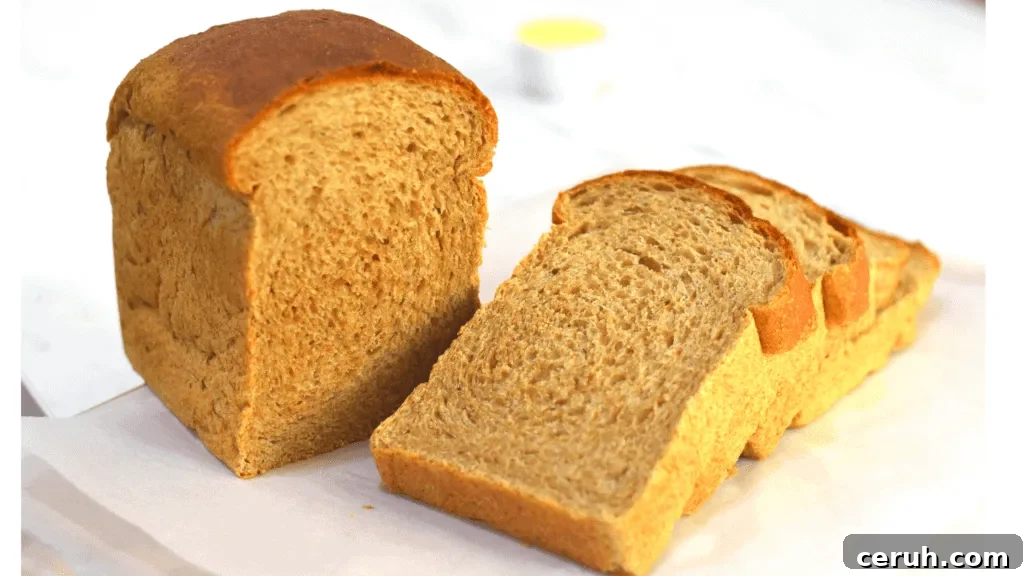
Common problems and solutions
Dense, heavy bread
- Rise time too short or too long—follow proofing cues rather than strict minutes.
- Proofing temperature too extreme—aim for moderate warmth; allow more time if cool.
- Inactive yeast—test yeast before using or try a fresh packet.
- Flour lacks gluten—common with some whole wheat brands. Add a portion of bread or all-purpose flour or use vital wheat gluten to strengthen the dough.
Undercooked center
- Oven too hot early on causes crust to set before the center bakes. Lower the temperature and extend baking time.
- Removing the loaf too soon—use visual, tap and temperature checks.
Collapsed loaf
Overproofing weakens the dough structure. Don’t let the second rise go far past the point needed for the loaf to reach the pan’s top; bake when it’s filled to about three-quarters of the pan height.
Strong yeast smell
- Over-risen dough, incomplete baking in the center, insufficient kneading, or too much yeast can cause a pronounced yeasty aroma.
Thick crust
- Possible causes: dough too dry after kneading, oven temperature too low causing prolonged bake time, or simple overbaking.
About whole wheat flour
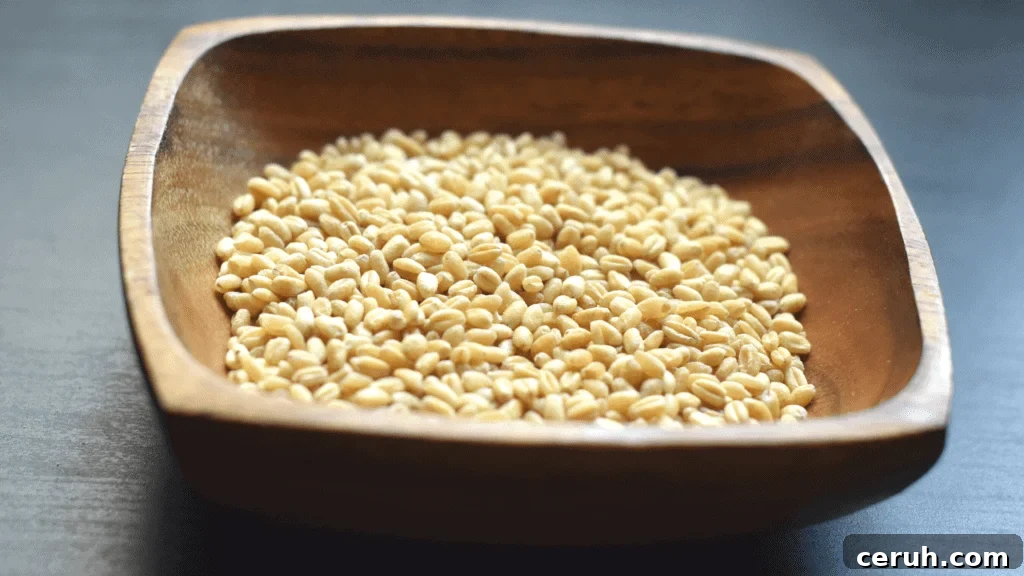
Whole wheat flour is milled from the entire wheat kernel—bran, germ and endosperm—so it retains more nutrients than white flour. Grind size varies: coarse to fine whole wheat flours produce different crumb textures. The endosperm supplies the majority of the gluten; white/all-purpose flour is mostly endosperm and typically yields stronger gluten and higher rise but lacks the nutrients found in whole wheat.
Because the germ contains oils, whole wheat flour can go rancid faster than white flour. Store it in the refrigerator or freezer if you don’t plan to use it within a month.
Are all whole wheat flours the same?
No. Different brands and milling processes yield flours with different water absorption and gluten potential. If your flour seems weak, try one of these approaches:
- Autolyse (hydrate and rest) to improve dough handling.
- Knead longer to encourage gluten formation.
- Add a portion (around 25–30%) of all-purpose or bread flour for better rise.
- Use mashed potato addition sparingly—potatoes can yield a moist crumb but make dough sticky and may reduce rise unless balanced with stronger flour.
From tests: adding ~28% all-purpose flour (257 g whole wheat + 100 g all-purpose) produced a softer, fluffier loaf. Combining a small amount of mashed potato with a flour blend can improve softness but may require handling adjustments.
Video
Brown bread recipe / Fluffy whole wheat bread
Ingredients
- 357 g whole wheat flour (2 3/4 cups)
- 236 ml lukewarm water (1 cup) — adjust by flour
- 2 tbsp honey or sugar (42 g honey or 25 g sugar)
- 1 tsp salt (6 g)
- 43 g butter (3 tbsp), softened
- 1 1/2 tsp instant yeast (4.5 g). If using active dry yeast, use 1 3/4 tsp and dissolve first.
Instructions
Prepare the dough
- Mix lukewarm water with honey (or sugar), yeast and salt until dissolved. If using active dry yeast, ensure it is fully dissolved.
- Add softened butter and whole wheat flour. Mix to form a shaggy dough, then turn out and knead 10–12 minutes, until soft and elastic. Kneading time may vary by flour strength.
First proofing
- Lightly oil a bowl, place the dough inside and coat with a little oil. Cover and let rise 60–90 minutes, until doubled.
Shape the dough
- Deflate and flatten into a rectangle about the width of your loaf tin. Roll into a log and place in a greased tin. Cover loosely with greased plastic wrap.
Second proofing
- Proof for about 45 minutes, until dough reaches about 3/4 the height of the pan. Preheat oven to 350°F (175°C).
Bake
- Bake at 350°F for 32–35 minutes. Tent with foil after ~25 minutes if browning too quickly. Cool before slicing.