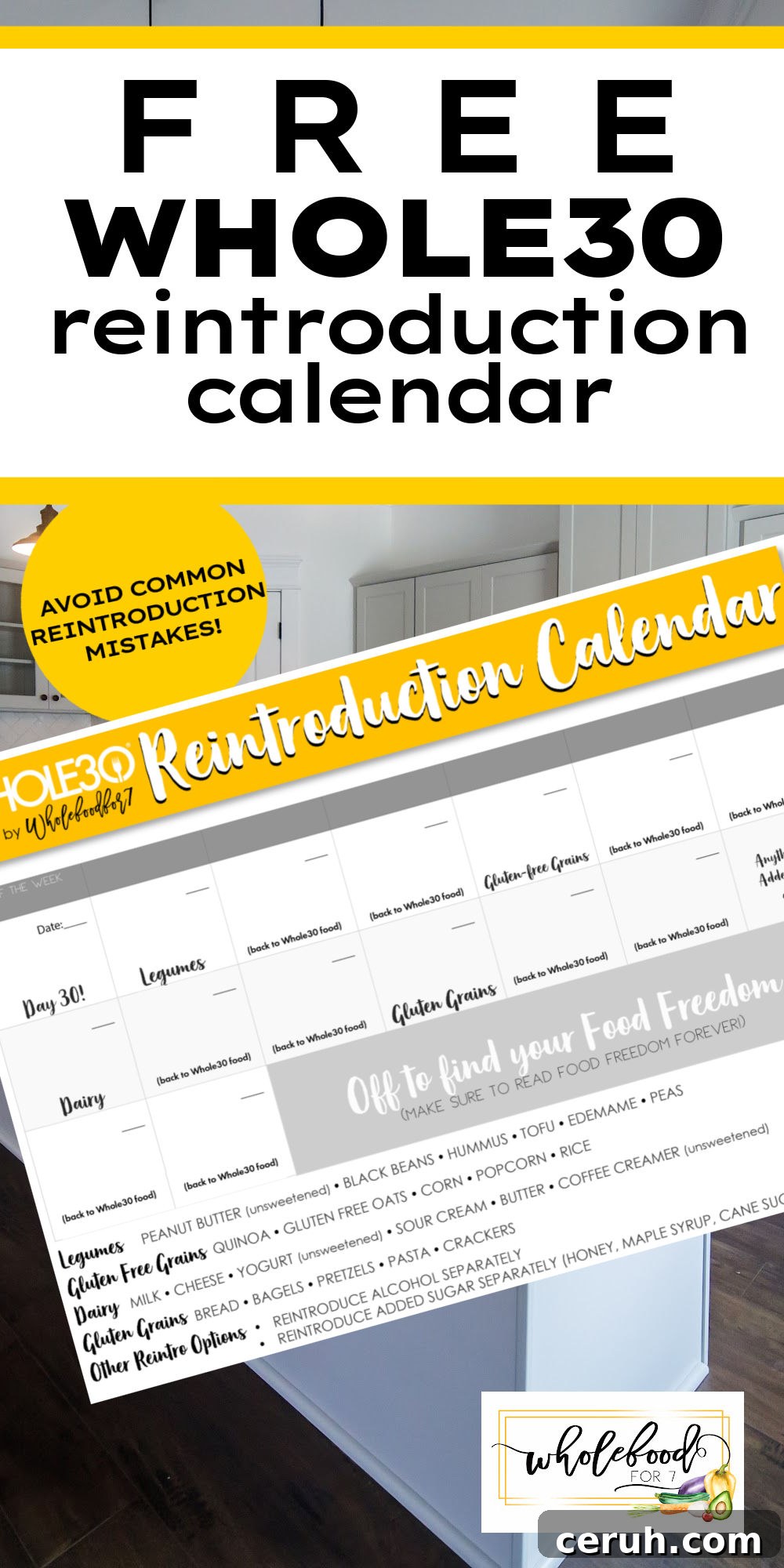
Making Whole30 Reintroduction Simple with a Calendar & Tracker
Completing a Whole30 round is a real achievement—congratulations. You’ve reset your eating habits, learned how certain foods affect your body, and embraced a cleaner, more intentional approach to nourishing yourself.
But the process doesn’t stop at Day 30. One of the most important steps after finishing Whole30 is reintroduction. This phase helps you apply what you learned, identify specific food triggers, and build a practical, sustainable way of eating long term.
Feeling Overwhelmed by Reintroduction?
It’s common to feel uncertain about what to reintroduce first, how to monitor your reactions, or how to avoid slipping back into old patterns. To make this transition straightforward, we created a Whole30 Reintroduction Calendar & Tracker—a simple, practical tool that guides you through each step.
Reintroduction is where you gather the details that inform your future food choices—how dairy, legumes, grains, and other groups affect your energy, digestion, mood, and sleep. Without a clear plan, it’s easy to miss the subtle reactions that reveal what works for you. Tracking responses in writing prevents confusion and ensures you can make confident decisions about your diet.
As Melissa Urban said, “There is no Food Freedom without a proper reintroduction.”
How This Free PDF Calendar Helps
This free PDF Whole30 Reintroduction Calendar + Tracker simplifies the whole process. As a former Whole30 Certified Coach, I’ve seen many people struggle with reintroduction—skipping steps or reintroducing too many foods at once. This calendar removes that uncertainty by giving you a clear, step-by-step schedule and space to record your observations.
Start by reading the official Whole30 guidance on reintroduction to understand the rationale and recommended order. Reintroduction is the bridge to lasting food freedom, and it’s not something to skip. The recommended approach is systematic: reintroduce one food group at a time, moving from least to most inflammatory when possible.
If your Day 30 falls on a different date or you need a custom order, that’s fine—adapt the plan to your schedule. The calendar includes a filled example based on a Day 30 landing on Tuesday, October 1, following a typical Fast Track reintroduction plan. Use the example as a template or modify it to suit your needs, making sure to include at least two days of Whole30-style eating between each reintroduction.
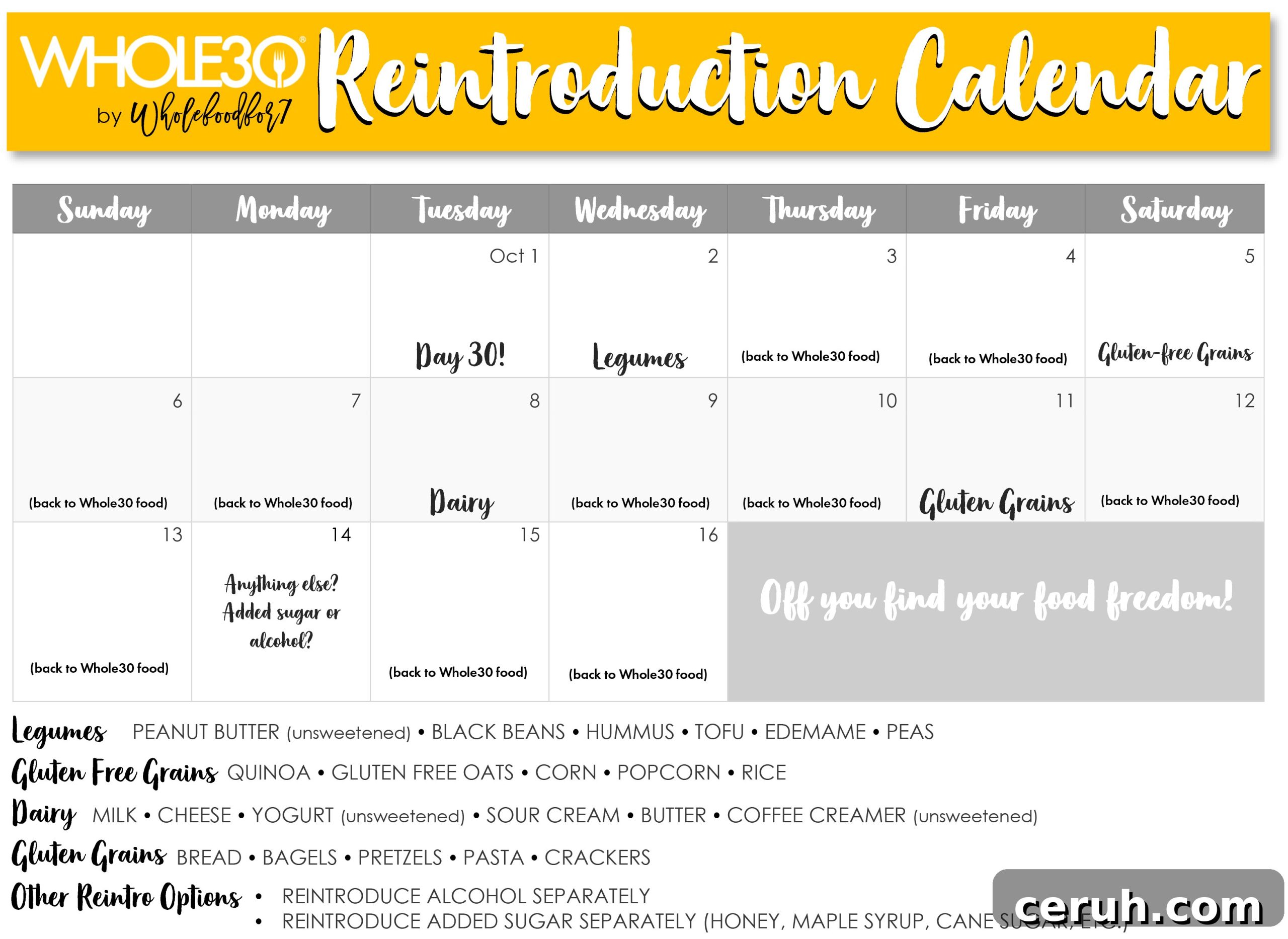
Sept 2019 Whole30 Reintroduction Calendar (example)
If you prefer to plan your own timeline, a blank calendar is provided so you can map reintroductions around your life. The blank version lets you swap the order or timing while still keeping the process organized and intentional.
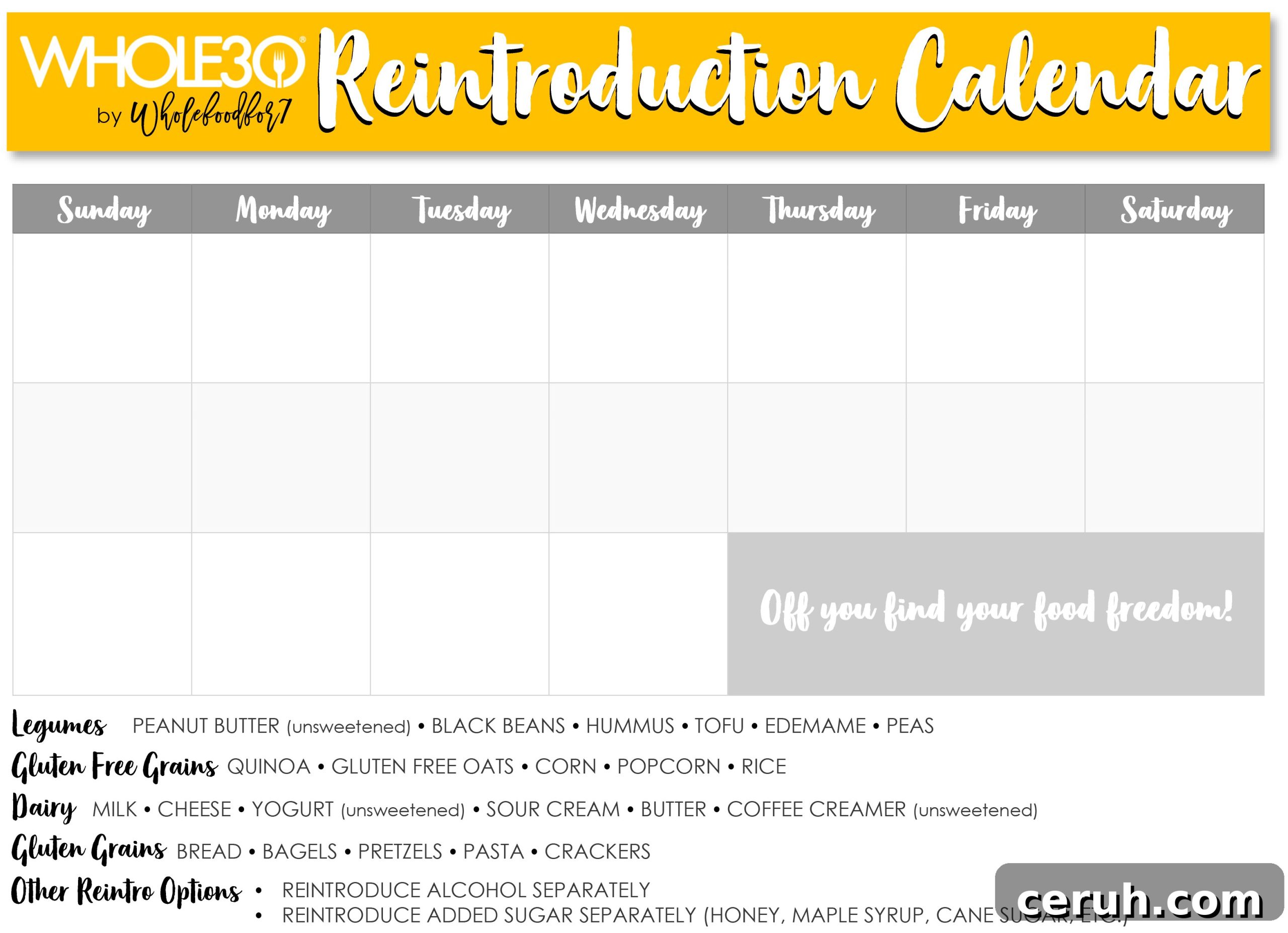
Blank Whole30 Reintroduction Calendar (create your own)
Tracking reactions is essential. You might think you’ll remember how you felt after trying a food, but notes made in the moment are far more reliable. The tracker included with the calendar gives you dedicated space to record symptoms, mood changes, digestion, sleep disturbances, energy shifts, and any other observations.
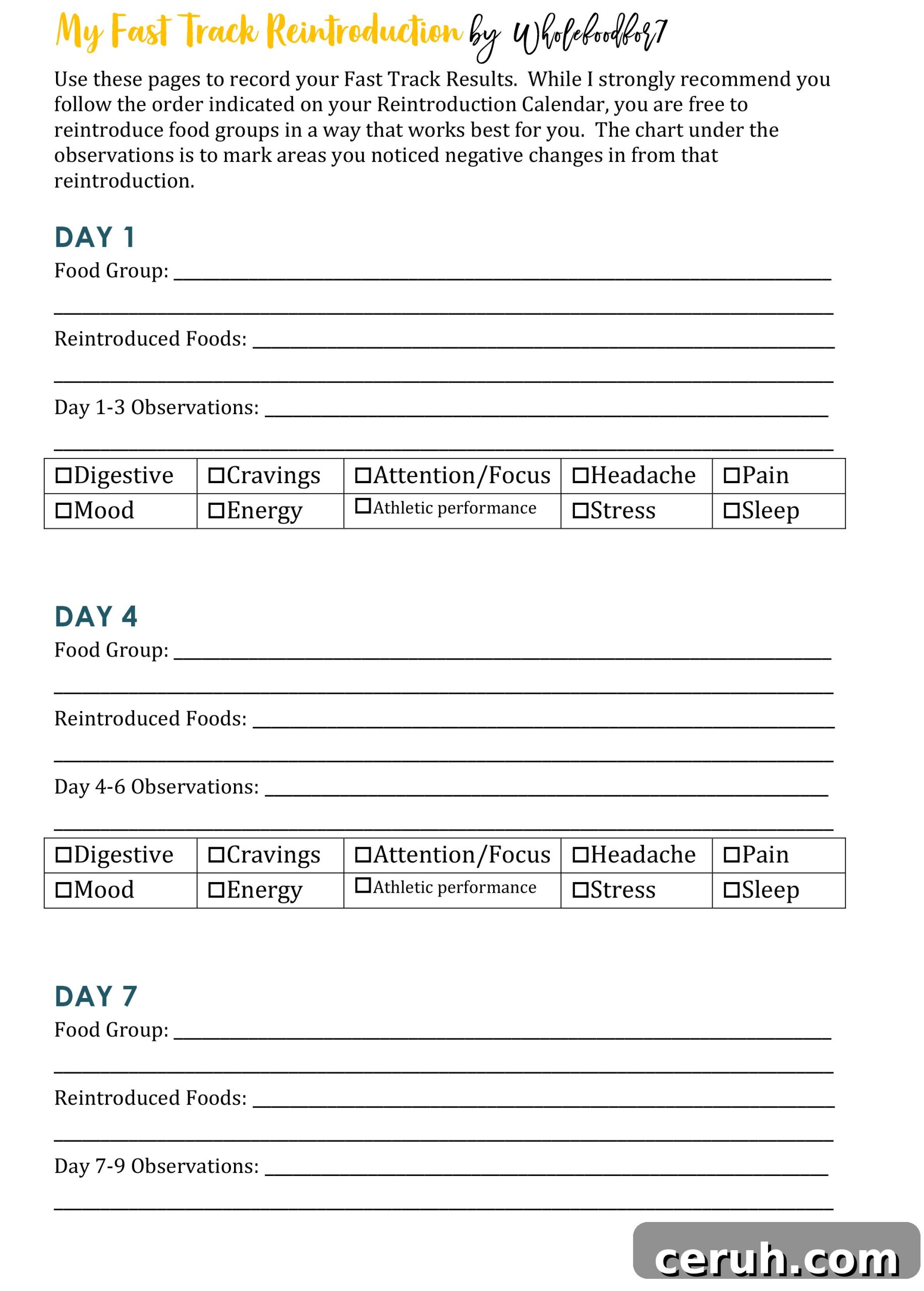
My Fast Track Reintroduction (tracker example)
The Whole30 Reintroduction Calendar & Tracker removes guesswork by providing a structured, day-by-day plan for reintroducing food groups and a reliable way to document your responses. Staying organized helps you get the most value from your Whole30 experience and makes it much easier to determine the best approach for your individual needs.
Whether you’re reintroducing foods for the first time or repeating the process, this tool supports a calm, methodical approach. It keeps the process manageable and encourages you to stay attentive to how your body responds.
Whole30 is about more than completing 30 days—it’s about discovering what food freedom means for you. Use the calendar and tracker to guide your reintroduction, record your results, and confidently shape a sustainable, personalized way of eating.