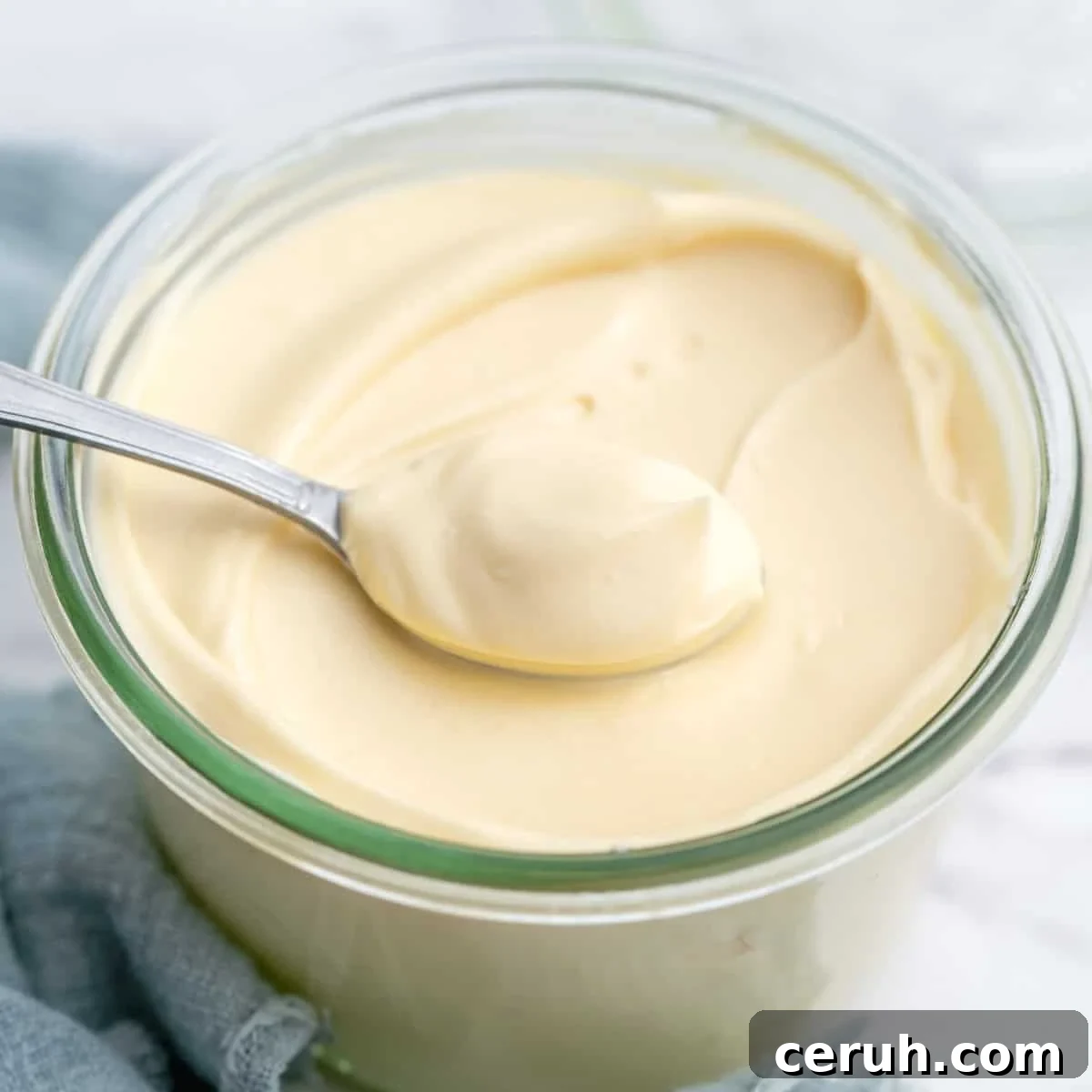
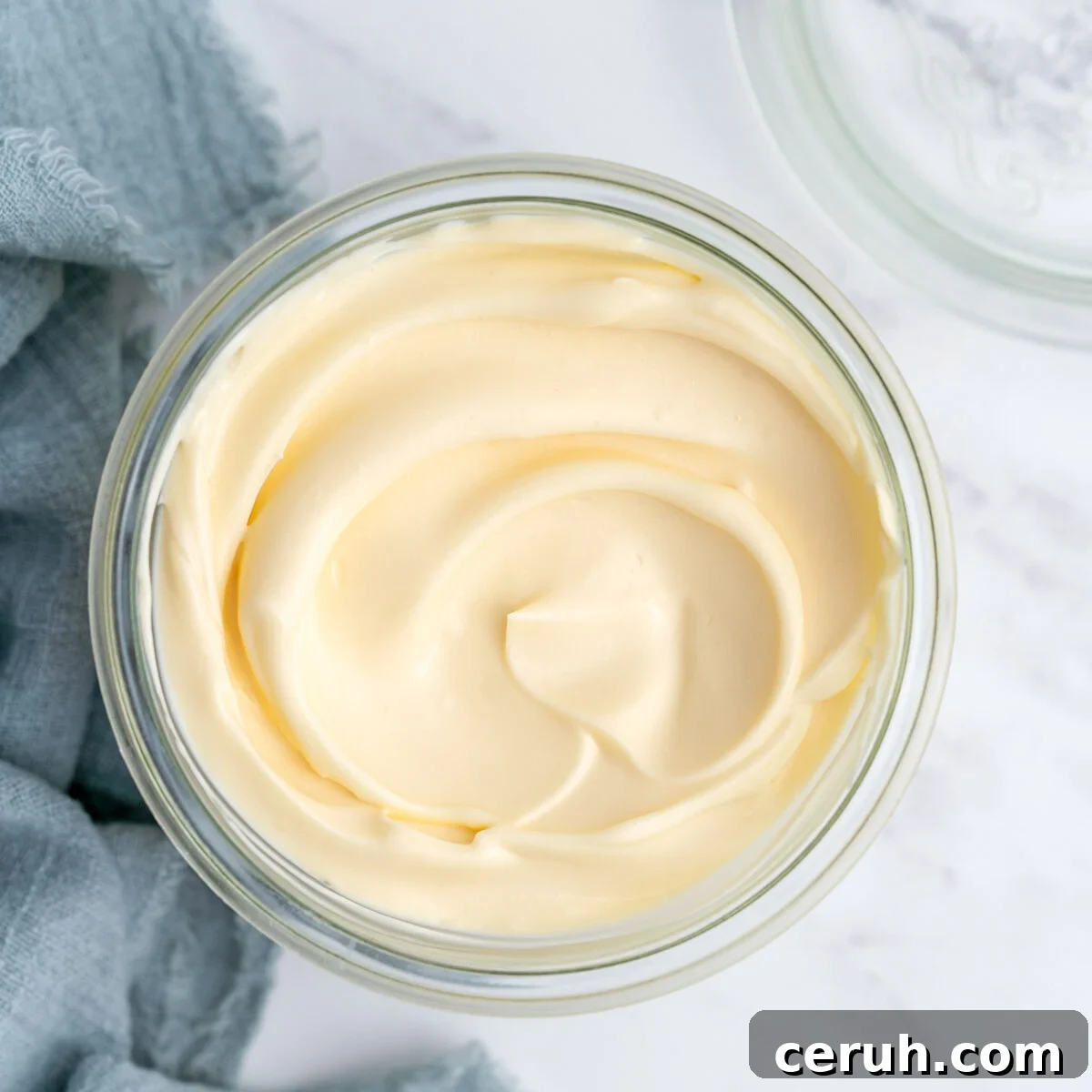
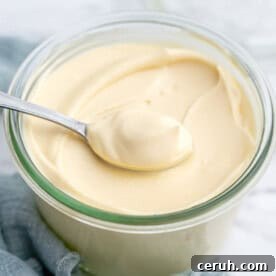
This Homemade Mayonnaise is thick, creamy, and bright — a flavor and texture you don’t get from most store jars. It’s perfect for spreading on sandwiches, stirring into potato salad, or mixing quickly with canned tuna or shredded chicken when you want something simple and satisfying.
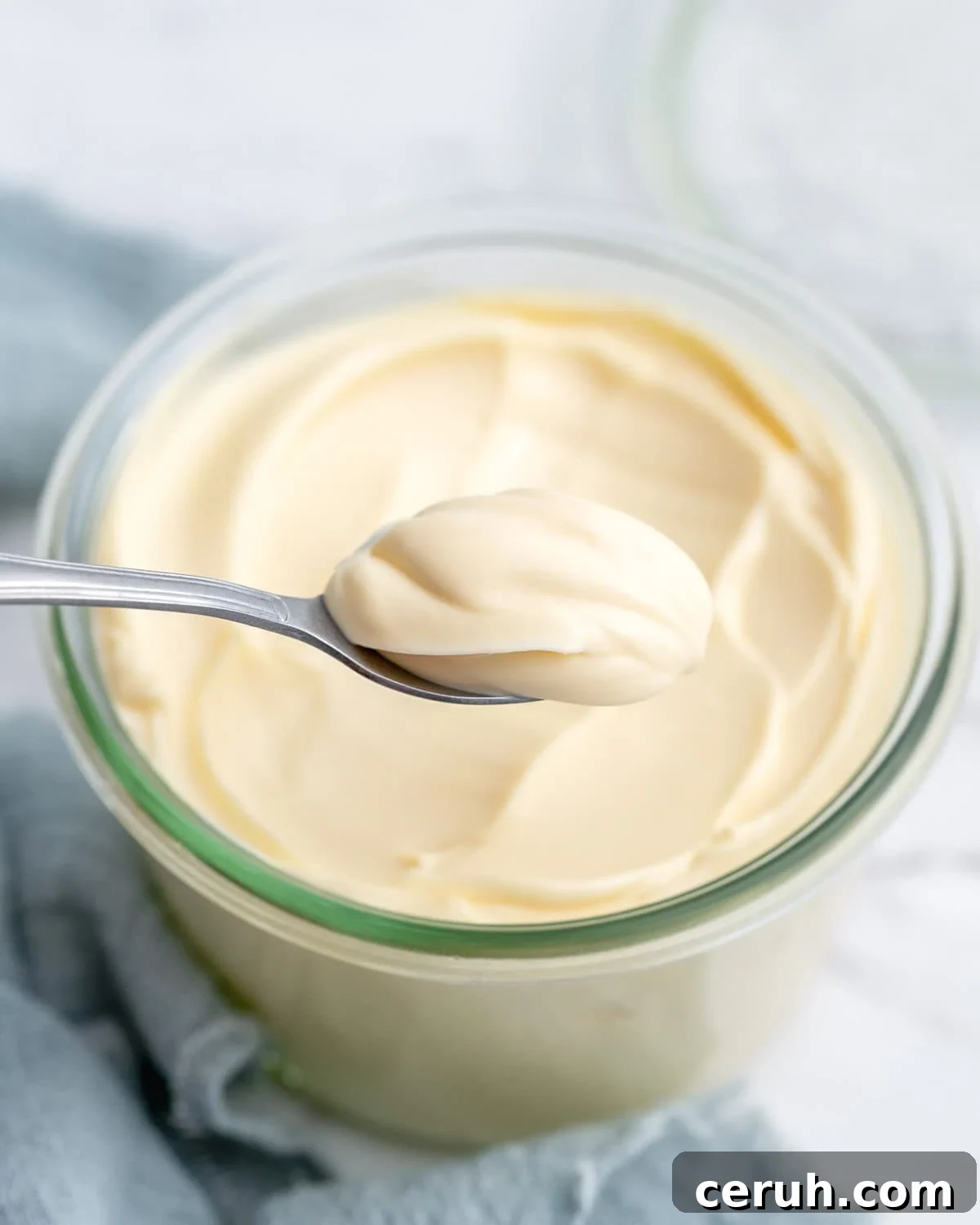
I prefer this mayo because it tastes fresh and clean, and I avoid the long ingredient lists on many commercial brands. Making mayonnaise at home is fast and rewarding — the flavor is noticeably brighter. I like avocado oil because it produces a light, smooth texture, but light olive or grapeseed oil work well too. Every time I make a batch my family notices the difference right away.
Key Ingredients
All you need to make a cup of fresh Homemade Mayonnaise. Measurements are shown in the recipe card below.
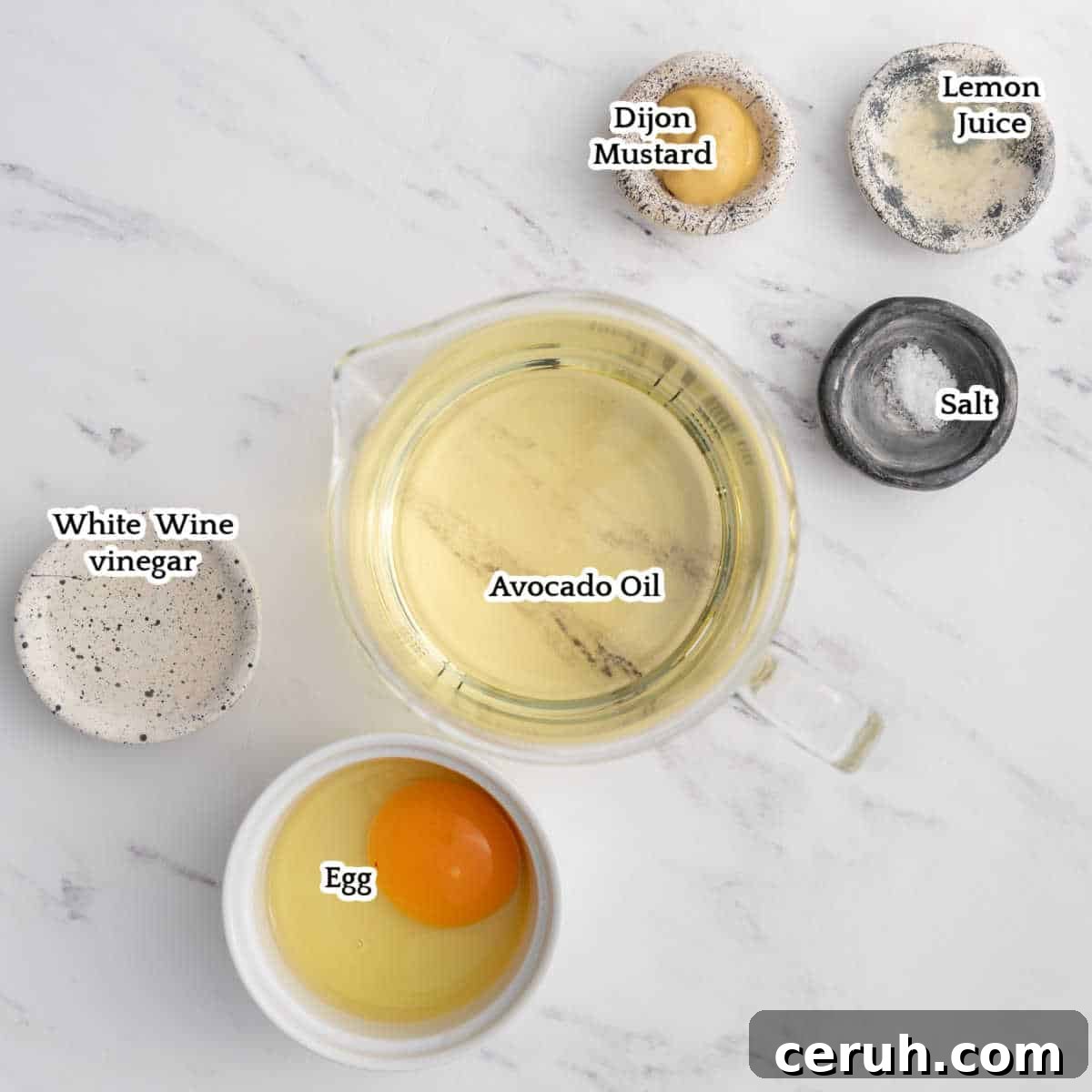
- Large egg: Use a fresh egg at room temperature for best emulsification.
- Avocado oil: Neutral, light flavor and healthy fats. You can substitute light olive or grapeseed oil; avoid extra-virgin olive oil, which can taste bitter.
- White or red wine vinegar: White wine vinegar keeps the flavor bright; red wine vinegar adds a slightly deeper tang.
- Lemon juice: Freshly squeezed for the best brightness; bottled 100% lemon juice is a fine backup.
- Dijon mustard: Helps the emulsion form and adds gentle tang. Yellow mustard will work in a pinch but gives a flatter flavor.
- Sea salt: Fine sea salt dissolves easily; if using table salt, start with a little less.
How to Make Homemade Mayonnaise
Follow these steps for a reliably thick, creamy mayonnaise:
Step 1: Add the whole egg, vinegar, mustard, lemon juice, and salt to a tall jar or the jar that came with your immersion blender. Pour the oil on top and let it settle for a few seconds.
Step 2: Insert the immersion blender into the jar so the blade sits on the bottom, centered near the egg yolk.
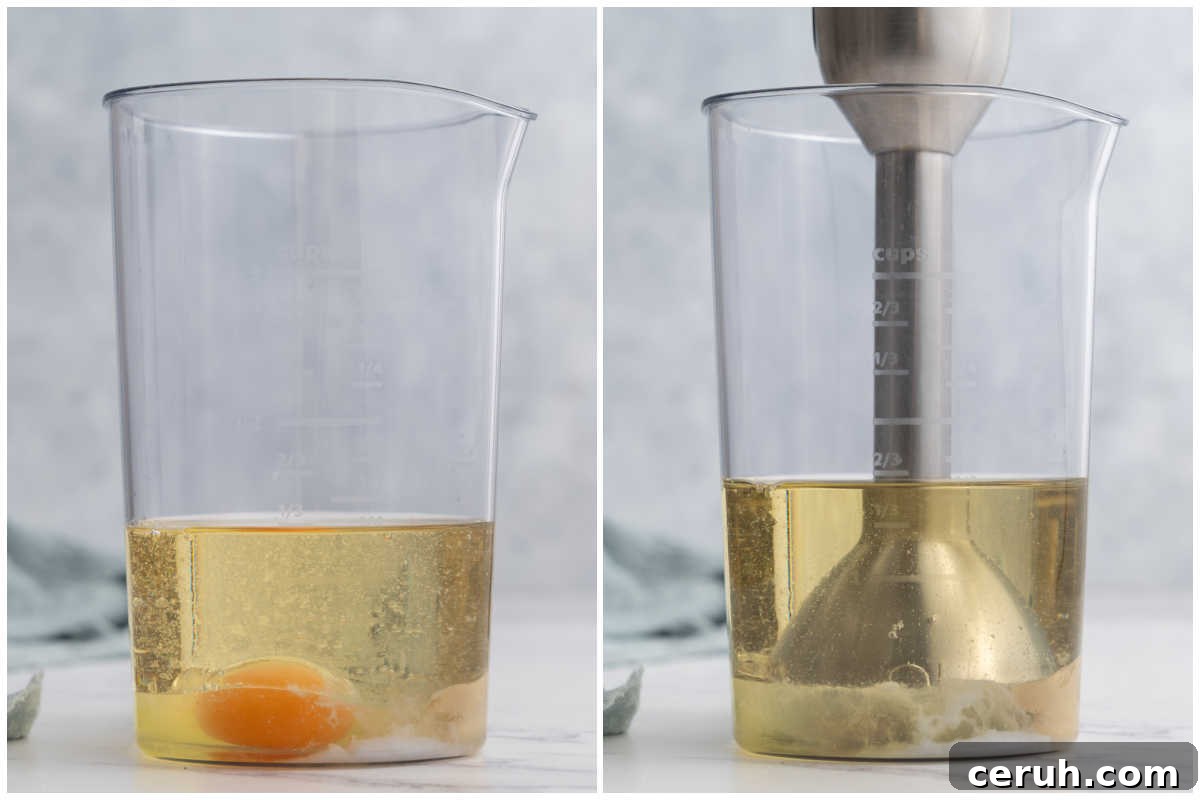
Step 3: Turn the blender on and hold it steady at the bottom for about 12–15 seconds until the mixture starts to emulsify.
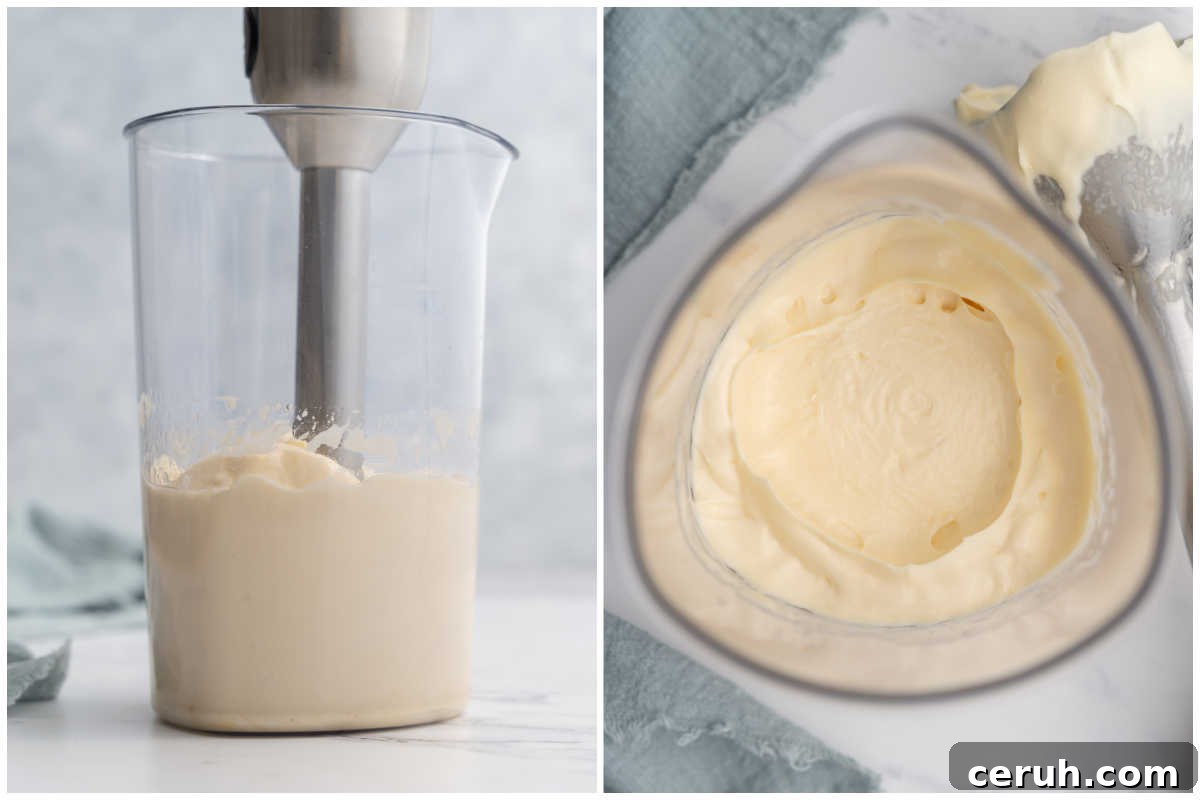
Step 4: Once the emulsion has formed, slowly move the blender up and down to incorporate the remaining oil and reach an even texture.
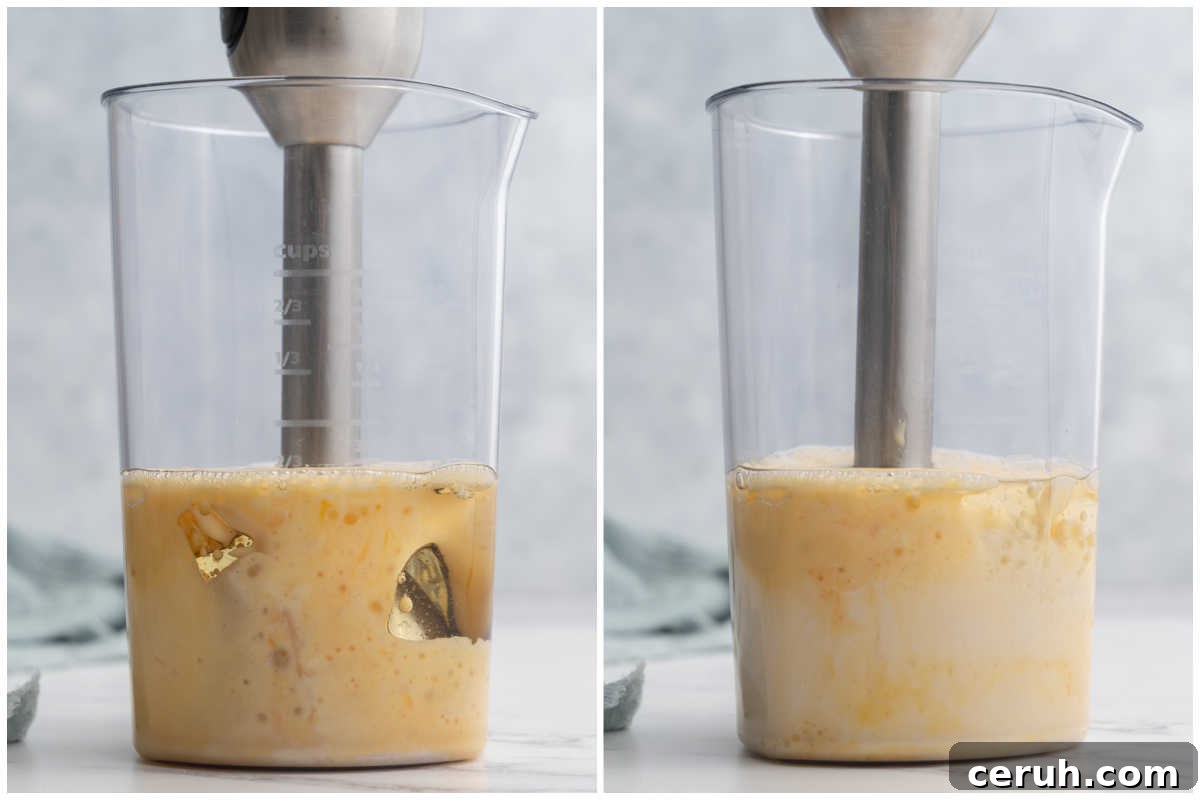
Step 5: Continue blending until the mayo is thick and glossy.
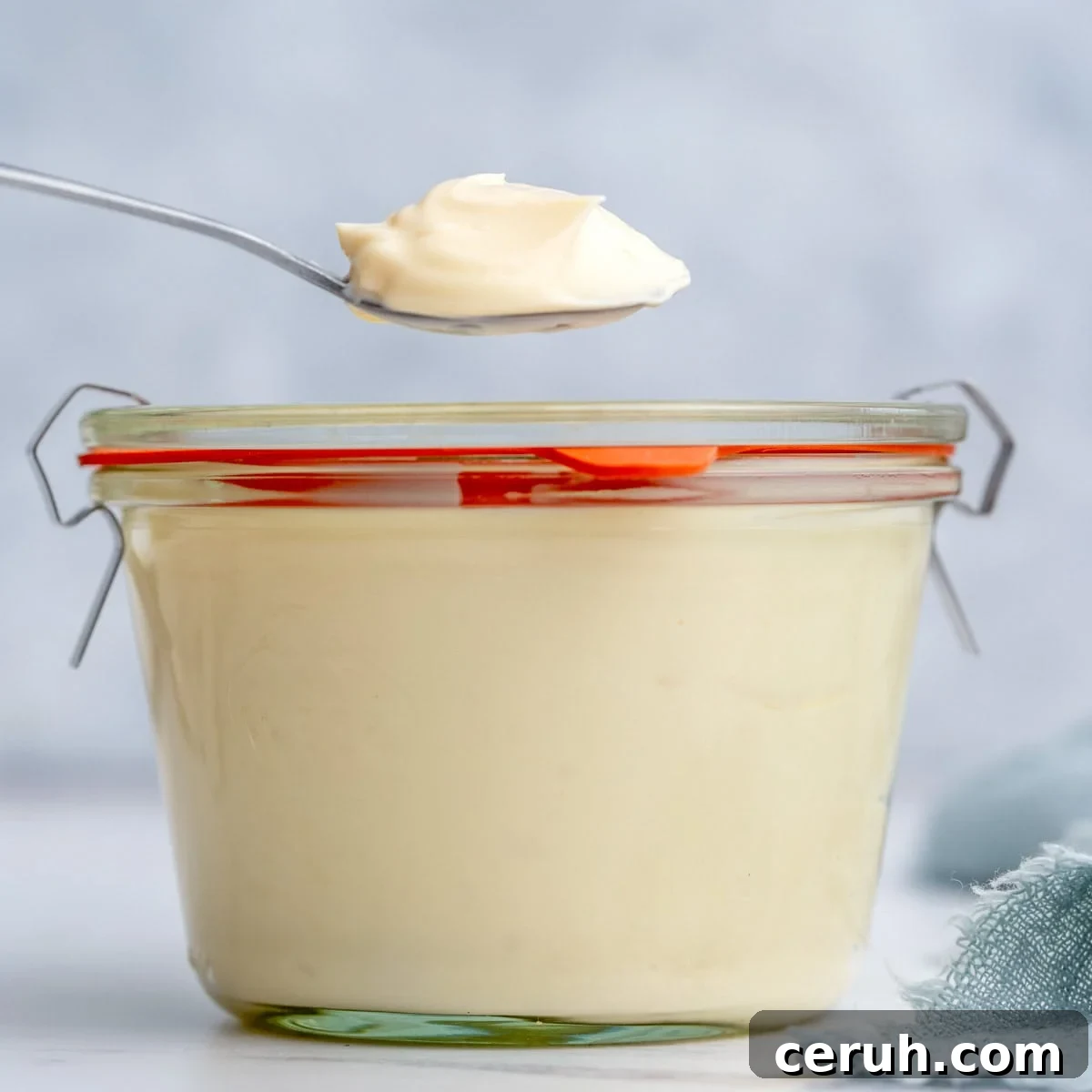
Step 6: Taste and adjust: add a little more lemon juice or salt if needed (a pinch of sugar can soften excess tang). Transfer to a lidded jar or airtight container and refrigerate. Use within one week.
Tips for the Best Homemade Mayo
- Use room-temperature eggs to help the emulsion form quickly and reliably.
- Add oil slowly if you’re using a blender or food processor — a thin, steady stream prevents the mixture from breaking.
- Choose a neutral oil such as avocado, light olive, or sunflower oil for the cleanest flavor.
- Acid stabilizes — lemon juice or vinegar improves flavor and helps keep the emulsion stable.
- Adjust thickness with a teaspoon of water at a time if the mayo becomes too stiff.
- Store correctly in a clean, airtight jar in the main compartment of the refrigerator for up to one week.
Common Questions
Separation usually happens when oil is added too quickly or the egg is too cold. Start with room-temperature ingredients and add oil slowly to avoid breaking the emulsion.
Yes. Using a yolk will make a richer, denser mayo. The whole egg keeps the texture lighter and is simpler for this recipe.
Store in an airtight jar in the main fridge compartment for up to one week. Because it contains raw egg, check smell and texture before use and discard if anything seems off.
Yes. Both work well — just add the oil very slowly while the motor runs to keep the emulsion stable.
More Homemade Condiments & Sauces
- Homemade Big Mac Sauce
- Homemade Pesto Sauce
- Homemade Ranch Dressing
- Lebanese Garlic Sauce
- Honey Mustard Dipping Sauce
- Easy Chimichurri Sauce
- Homemade BBQ Sauce
- Green Goddess Dressing
Thanks for stopping by and trying this recipe. If you enjoyed it, please leave a rating or share your experience in the comments — I love hearing what you make and any tweaks you try.
Homemade Mayonnaise Recipe
Ingredients
- 1 large egg, room temperature
- 1 cup avocado oil (or light olive oil)
- 2 teaspoons white wine vinegar (or red wine vinegar)
- 1 teaspoon lemon juice
- 1 teaspoon Dijon mustard
- ¼ teaspoon sea salt
Instructions
- Add the whole egg, vinegar, Dijon mustard, lemon juice, and sea salt to a tall jar or the jar for your immersion blender. Pour in the oil and let it settle for a few seconds.
- Place the immersion blender so the blade sits on the bottom, over the egg yolk if possible.
- Turn the blender on and hold it steady for about 12–15 seconds until the mixture begins to emulsify.
- Slowly move the blender up and down to incorporate the rest of the oil and even out the texture.
- Blend until the mayonnaise is thick and creamy. Taste and adjust with more lemon, salt, or a tiny pinch of sugar if needed. Transfer to a lidded jar and refrigerate for up to one week.
Notes
- This recipe yields about 1 cup of mayonnaise (roughly 16 tablespoons).
- Room-temperature ingredients, especially the egg, help the emulsion form quickly.
- If you don’t have an immersion blender, a food processor or high-speed blender will work; drizzle the oil in slowly while running the motor.
- For a richer, more stable mayo, try one room-temperature egg yolk instead of the whole egg.
- If raw egg is a concern, use pasteurized eggs for the same creamy result.
- If the flavor is too tangy, add up to ½ teaspoon of sugar to balance it without making it noticeably sweet.
- Store in an airtight jar in the main fridge compartment (not the door) for up to one week to keep temperatures steady.
Nutrition
Nutrition information is an approximation.
Additional Info
Share your results and any tweaks you made — I love hearing from readers who try the recipe.