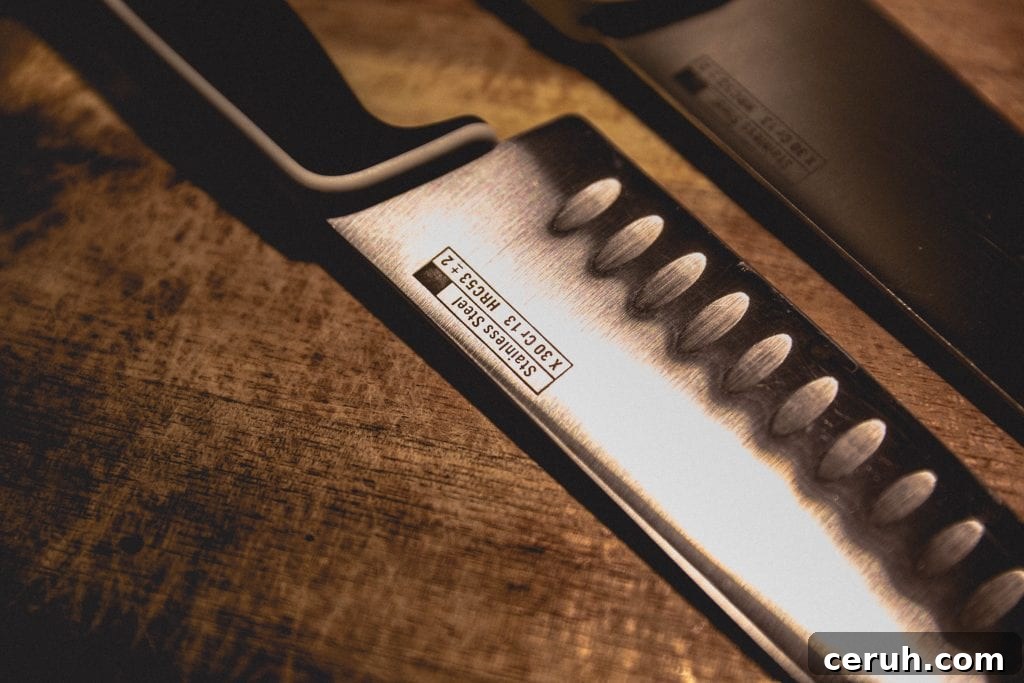
Choosing the right knife is one of the first steps when adding scratch cooking and freshly prepared foods to a school menu. Different knives serve different purposes, so select knives based on the tasks they’ll perform in the kitchen.
Paring Knife
A paring knife is a small, thin-bladed tool ideal for coring, peeling, and detailed work with fruits and vegetables. Its size and control make it useful for delicate slicing and trimming tasks.
For example: deseeding jalapeños, slicing olives
Chef Knife
The chef knife is an all-purpose kitchen knife. Versatile and sturdy, it’s designed for mincing, slicing, dicing, and chopping a wide range of ingredients.
For example: trimming watermelon rind and dicing, cutting celery into cubes, slicing carrots into sticks
Pay Attention to Size
Chef knives come in various lengths, typically from 6 to 12 inches. If you’re new to using a chef knife, start with a 6-inch blade. It’s easier to handle and less intimidating than a full-size knife, allowing you to learn proper technique. As you gain confidence and skill, you can move to a larger blade for faster, more efficient work on both small and large items.
Proper Cutting Technique
Using the correct cutting technique reduces fatigue and the risk of injury. A chef knife should be used with motion driven largely by the shoulder and upper arm—stronger muscle groups that tolerate repetitive use. Relying on a paring knife for tasks meant for a chef knife forces the wrist and forearm to do more work, which over time can lead to strain or injury. Learn and practice the proper grip and rocking motion to make prep work safer and more efficient.

Practice Makes Perfect
At first a chef knife may feel unfamiliar, but with regular practice your speed, accuracy, and confidence will improve. Investing time in proper technique pays off with quicker prep times and a safer kitchen environment.