
Leeks are in season from winter through early spring and are a classic ingredient in many comforting dishes, such as creamy leek and mushroom pasta. They belong to the allium family, alongside onions, shallots, chives, and garlic, but leeks have a subtler, more refined flavor than sharper onions. If you don’t have leeks on hand, several excellent substitutes can mimic their mild, sweet onion-like profile. Keep in mind that one large leek yields about one cup of chopped leek.
Green Onions or Chives
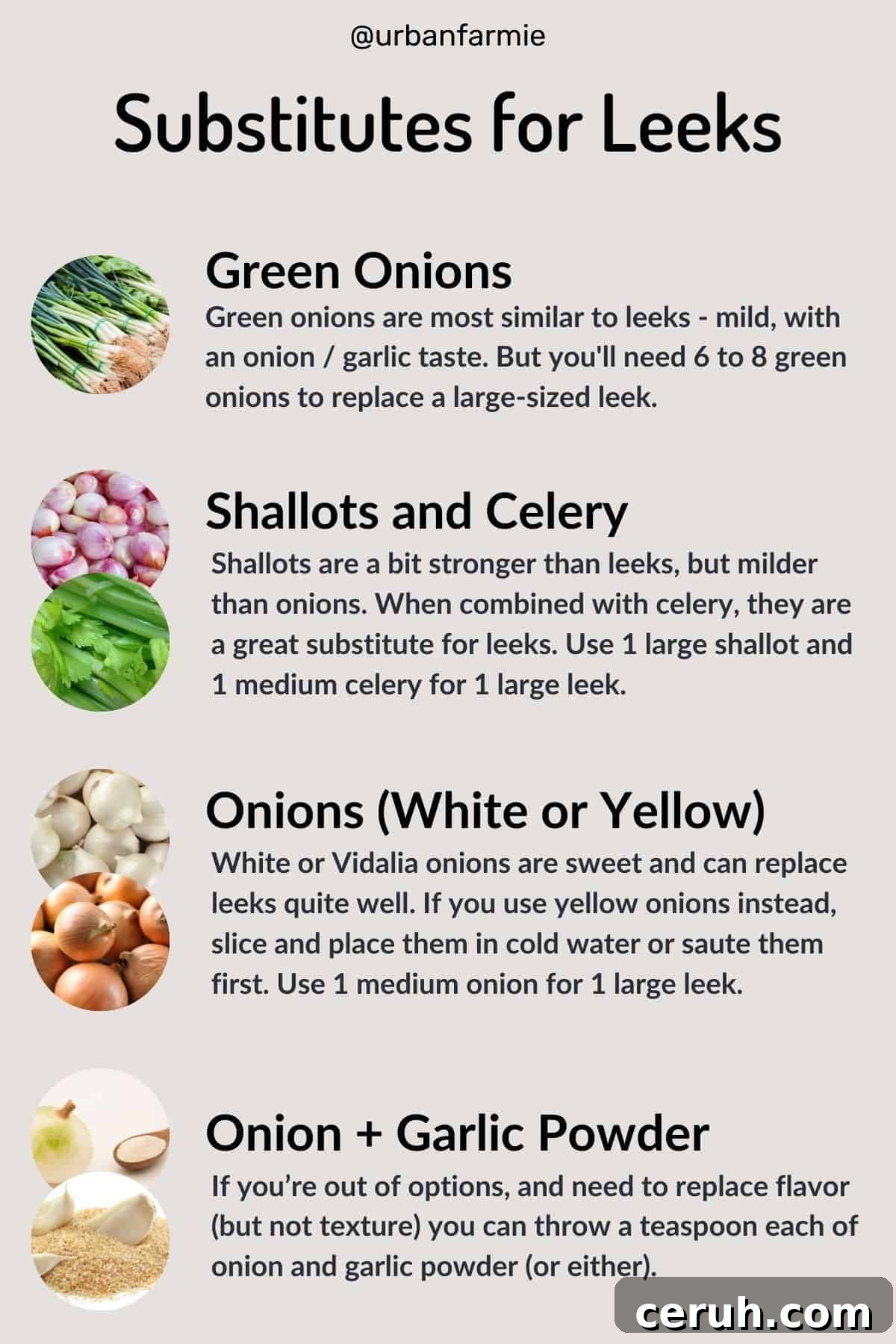
Green onions, also called scallions, are my top choice for replacing leeks. Their flavor is similarly mild with a gentle onion-garlic character that works well in soups, sautés, and salads. The main difference is scale: you will need more scallions to replace one leek. Typically, 6 to 10 scallions approximate one large leek, depending on size. Chives offer a comparable flavor but in much smaller amounts, so they’re best used as a finishing herb rather than the main cooked aromatic.
Shallots + Celery
Combining shallots and celery is an excellent way to replicate the complexity of leeks. Shallots are milder than regular onions but more pronounced than leeks; when paired with the fresh, slightly vegetal crunch of celery, the blend approximates the texture and flavor of leeks in many recipes. For one large leek (about one cup chopped), substitute with one large shallot (or two medium shallots) plus one medium celery stalk. If you only have one of those items, you can use two large shallots or two medium celery stalks to get closer to the leek’s presence in the dish.
Onions
White onions or Vidalia onions are a straightforward substitute and often the easiest to source. Their natural sweetness can approach the mellow notes of leeks. If you only have sharp yellow onions, reducing their bite will help: slice them and soak briefly in cold water, or cook them longer over low heat to mellow their edge. Use one medium onion to replace one large leek. For recipes where leeks are cooked until tender, make sure to give onions enough time to soften and caramelize slightly so they blend into the dish rather than standing out with a harsh flavor.
Onion & Garlic Powder
If texture is not important and you only need to reproduce the leek’s flavor, pantry spices can work in a pinch. A teaspoon each of onion powder and garlic powder can provide a quick flavor fix for a cup of chopped leek. Adjust amounts to taste, and remember that powders lack the moisture and body of fresh leeks, so they’re best in cooked dishes where the leek mainly contributes aroma rather than texture.
FAQs
For soups where leeks are one component (for example, potato-leek soup alongside potatoes), green onions, shallots with celery, or regular sweet onions work well. When leeks are the star ingredient, aim for substitutes that will be cooked gently and long enough to soften—sautéing onions or shallots before adding them to the soup helps bring out sweetness and more closely match the flavor and texture of leeks.
Typically, the white and light green parts of leeks are used for eating because they’re tender and mild. The darker green tops are tougher and have a stronger, more fibrous texture; they can be saved for making flavorful stocks or simmered longer if added to dishes where texture is less important. Trim off the root end and discard any damaged outer layers before using.
When choosing a substitute, consider the role leeks play in the recipe. If they’re meant to provide a gentle, sweet onion backbone, reach for scallions or sweet onions and cook them gently. If you need a closer approximation of texture and complexity, combine shallots with celery. And when convenience counts more than texture, powdered onion and garlic will give you the aromatic base you need. Adjust quantities by taste and be mindful of cooking times so the substitute blends smoothly into your dish.