
If you’ve ever made kimchi, you’ve likely encountered salted shrimp, known in Korean as Saeujeot (새우젓). It may look modest in the jar, but this tiny, fermented ingredient delivers a powerful burst of umami that dramatically deepens the flavor of many Korean dishes.

What Is Salted Shrimp?
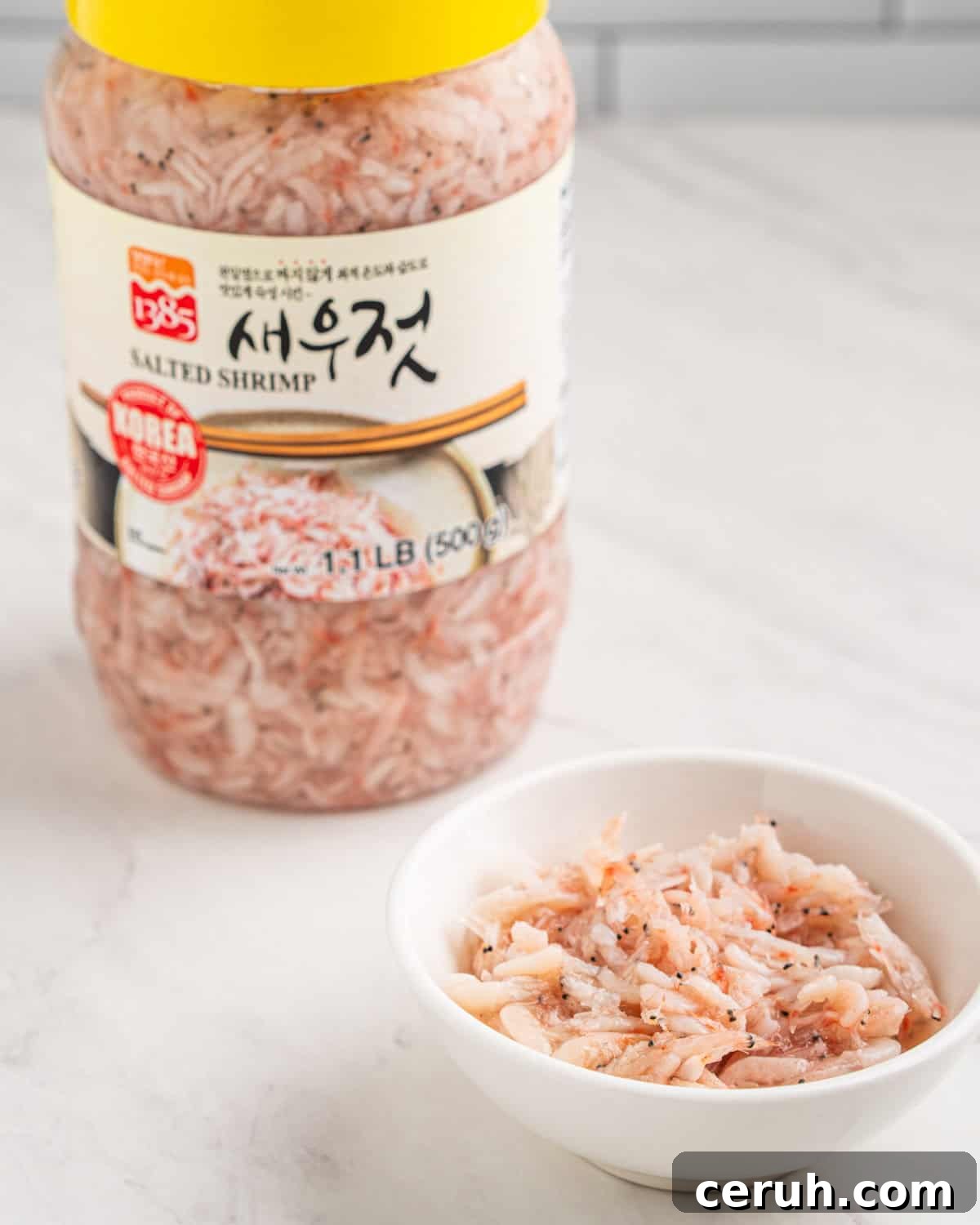
Salted shrimp, or Saeujeot, is a traditional Korean fermented seafood condiment made from very small shrimp preserved in salt. The shrimp are salted soon after harvest and aged for a period of months, during which natural fermentation produces a briny, slightly funky paste rich in savory depth. The resulting pinkish mixture is intensely flavored, so a little goes a long way.
Typically sourced from coastal waters, these tiny shrimp develop concentrated umami as they age. The texture is paste-like, and the aroma is distinctly saline and savory—an ingredient designed to enhance other flavors rather than dominate them.
How It’s Used in Korean Cooking
Its most famous role is in kimchi, where Saeujeot helps season and encourage fermentation of the cabbage, contributing the characteristic depth and subtle seafood note that define authentic kimchi. Beyond kimchi, salted shrimp appears in soups, stews, dipping sauces, and various banchan (side dishes).
Popular pairings include Bossam (boiled pork wraps), where it’s combined with sesame oil, garlic, and sometimes chili for a pungent dipping condiment. It’s also occasionally stirred into tofu stews like Sundubu-jjigae or used sparingly in vegetable dishes to replace or reduce the need for plain salt, adding complexity rather than just saltiness.
Where to Find Salted Shrimp
You’ll usually find Saeujeot in the refrigerated section of Korean or Asian grocery stores, shelved near other fermented staples like gochujang and doenjang. It’s commonly sold in small plastic tubs or jars labeled Saeujeot or Salted Fermented Shrimp.
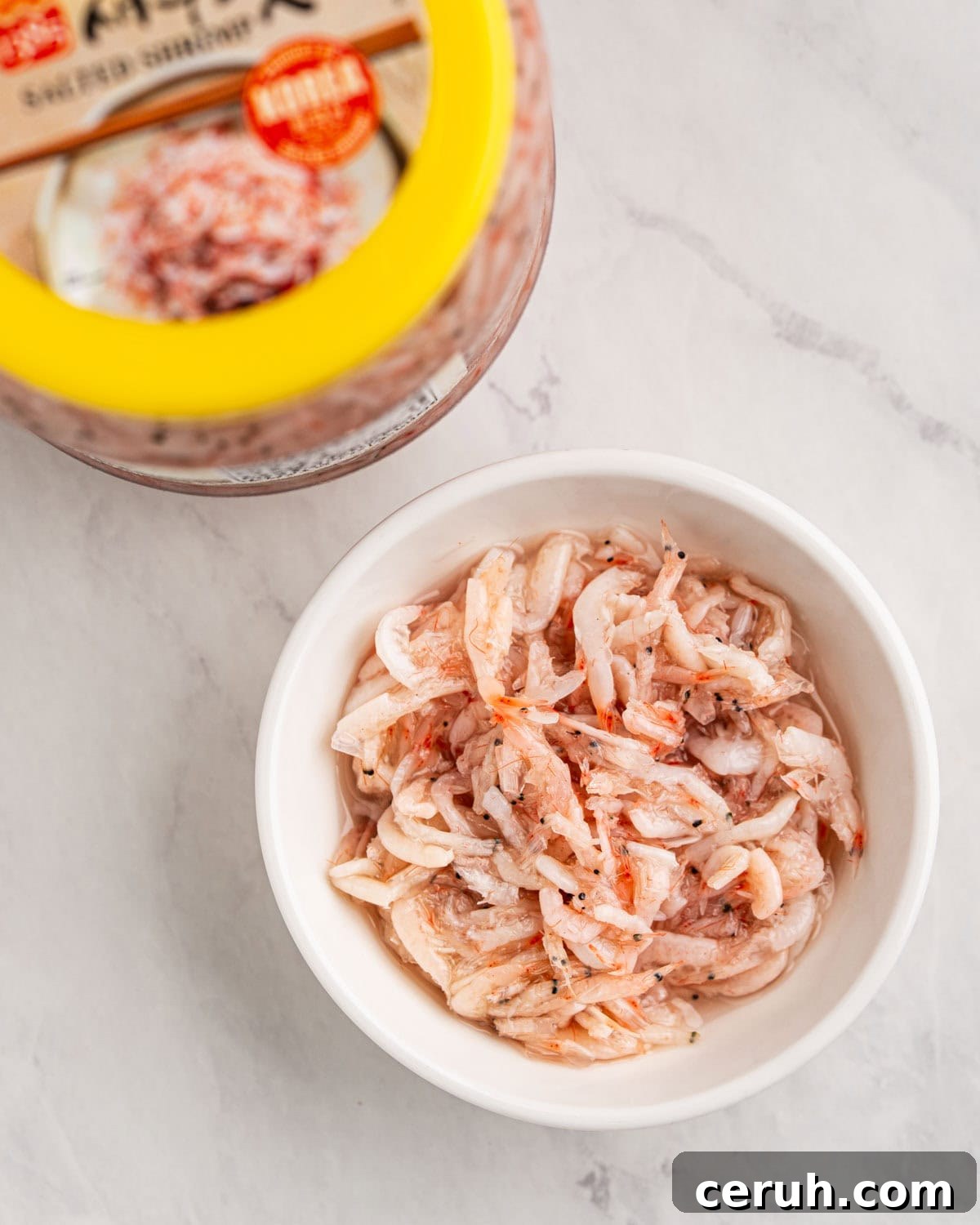
When selecting a jar, look for shrimp that appear pale pink and emit a clean, salty aroma rather than an overpowering fishy smell. After opening, keep the container tightly sealed and refrigerated. Properly stored, salted shrimp can keep for months and often develops more rounded flavors as it continues to age.
How to Use It (and How Much)
Salted shrimp is very salty and highly concentrated, so use sparingly. A teaspoon or two is typically enough to season a dish for several servings. For sauces or marinades, you can mash or finely mince it so it blends evenly.
In kimchi, it’s usually mixed into the seasoning paste to bolster umami. For a simple dipping sauce, combine a small amount with soy sauce, vinegar, and sesame oil. Adding just a touch to stews, soups, or vegetable dishes enhances overall savory balance without making the dish taste overtly of seafood.
Substitutes for Salted Shrimp
If Saeujeot isn’t available, you can use alternatives that provide similar savory, fermented notes:
- Fish sauce: Readily available and close in flavor. Use about half the amount because it’s thinner and still salty.
- Anchovy paste or anchovy sauce: Offers comparable salty depth and works well in kimchi or broths.
- Dried shrimp (soaked and minced): Provides a seafood umami that approximates the original, though salt levels may differ.
- Vegan option: A combination of soy sauce and miso paste can mimic the fermented richness without using seafood.
Storage Tips
Store salted shrimp in an airtight container in the refrigerator. It can remain usable for six months or longer and keeps even longer if frozen. The high salt content preserves the shrimp, so a stronger smell over time is normal and part of the product’s character rather than a sign of spoilage.
The Secret Ingredient You Didn’t Know You Needed
Though small and often overlooked, salted shrimp is a transformative ingredient. Whether you’re making traditional kimchi or simply want to deepen the flavor of soups, stews, or sauces, a spoonful of Saeujeot adds a complex, savory lift that enhances the entire dish. Once you start cooking with it, you’ll quickly appreciate how much it contributes to authentic Korean flavor.