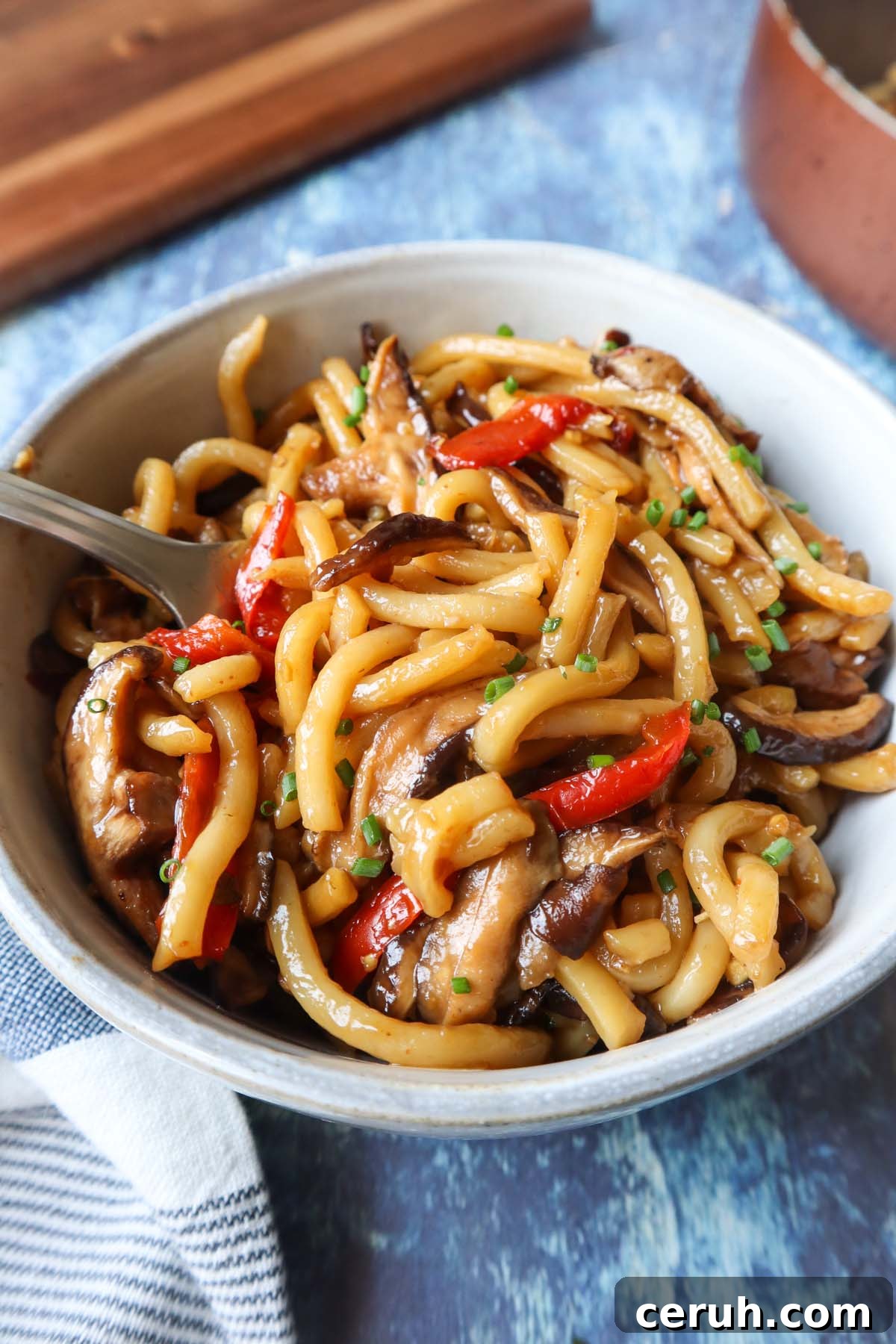
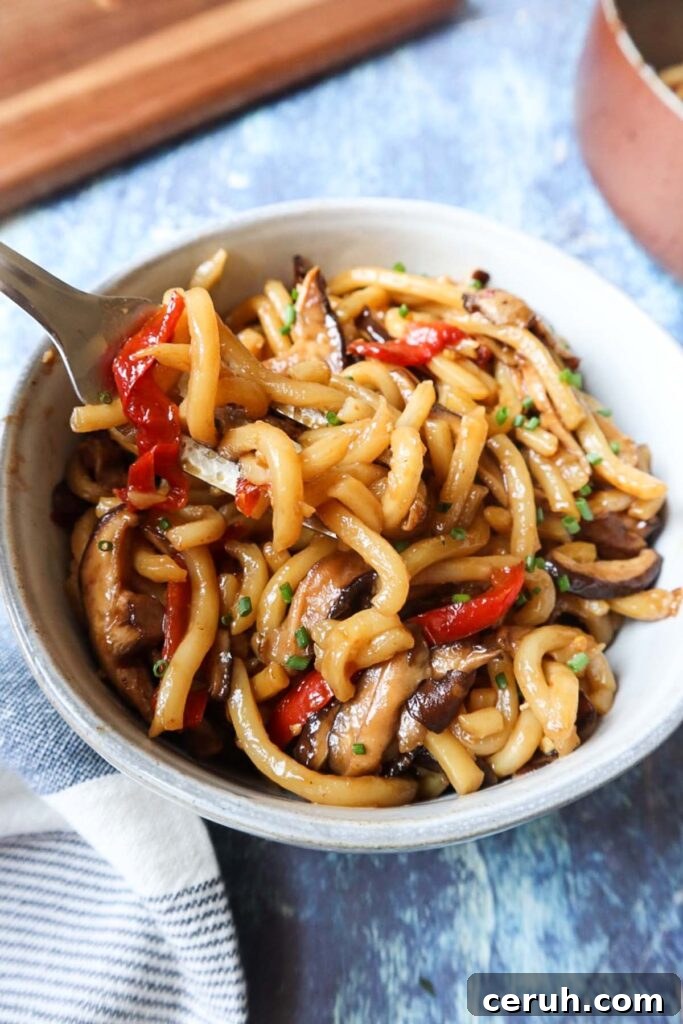
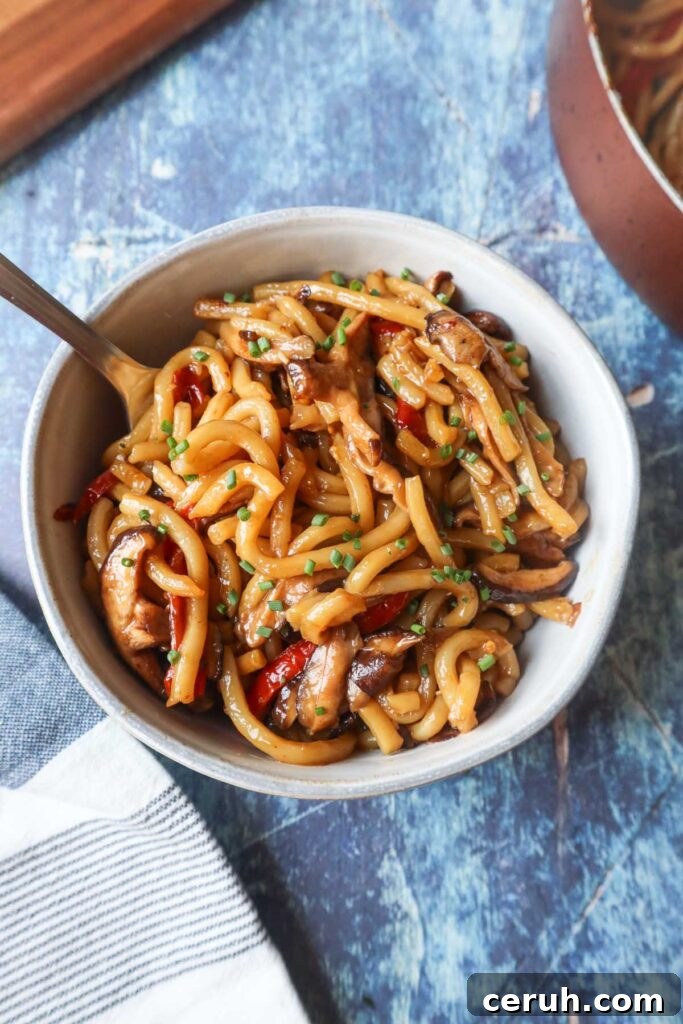
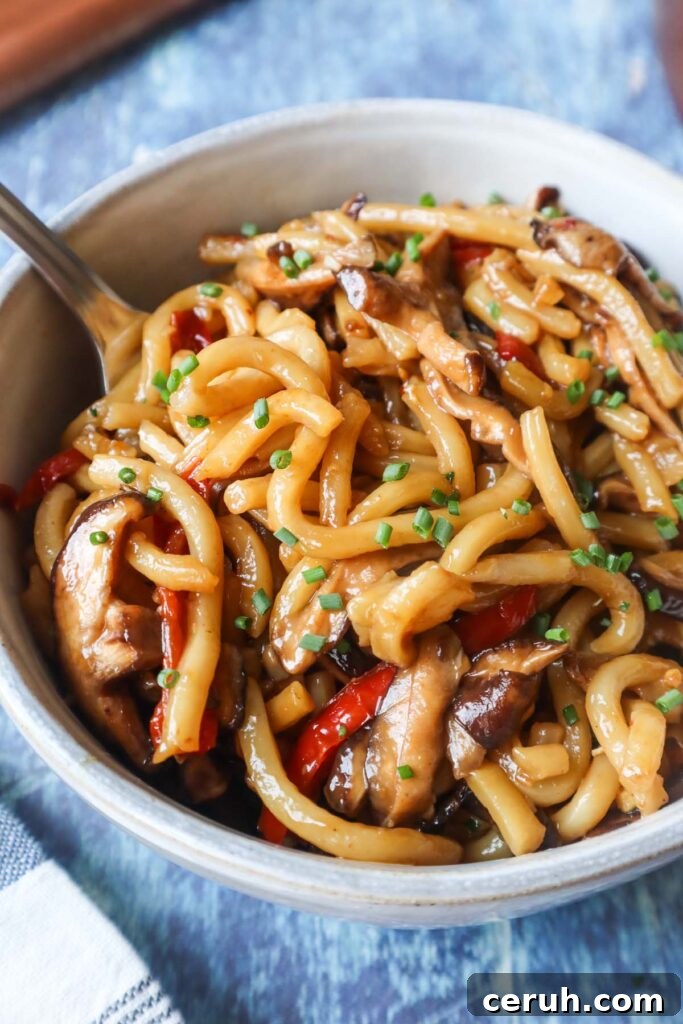
Teriyaki udon is a savory Japanese stir-fry featuring thick, chewy udon noodles tossed in a well-balanced teriyaki sauce. The result is a sweet, tangy, and umami-rich dish that’s quick to prepare and easy to customize.
Jump to Recipe
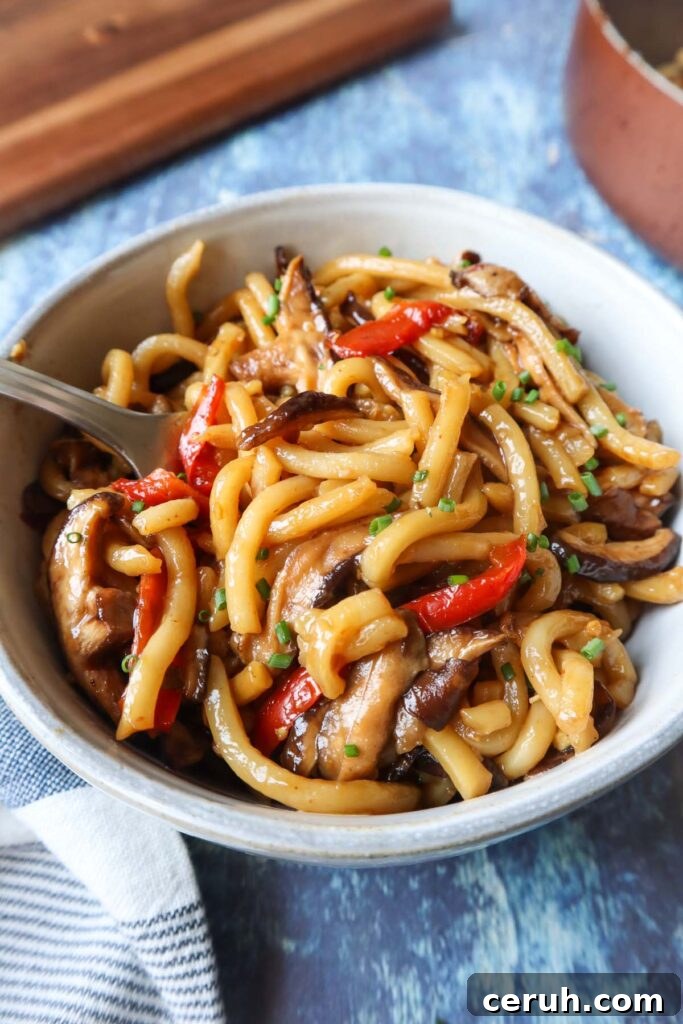
Noodles are my weakness, and udon is a favorite for its satisfying chew and neutral flavor that soaks up sauces beautifully. This recipe stands out because it comes together fast using simple ingredients and can easily be made vegetarian or expanded with protein.
This teriyaki udon stir-fry uses common pantry items and pre-cooked udon for a speedy meal. For a heartier option, serve it topped with cooked chicken or your preferred protein.
Reasons You’ll Love Teriyaki Udon Noodles
Flavorful and umami-packed: A blend of soy and teriyaki-style seasonings creates a rich, savory sauce that clings to the noodles and vegetables.
Comforting and filling: Udon’s thick texture makes this a comforting, satisfying bowl that keeps you full longer.
Quick and simple: Ready in about 15 minutes when you use pre-cooked udon and basic vegetables — ideal for busy weeknights.
Versatile: Easily customize with chicken, beef, tofu, seafood, or extra vegetables to suit dietary preferences or what’s in your fridge.
Classic Japanese inspiration: This home version delivers the familiar flavors of restaurant teriyaki udon without the cost or wait time.
Ingredients
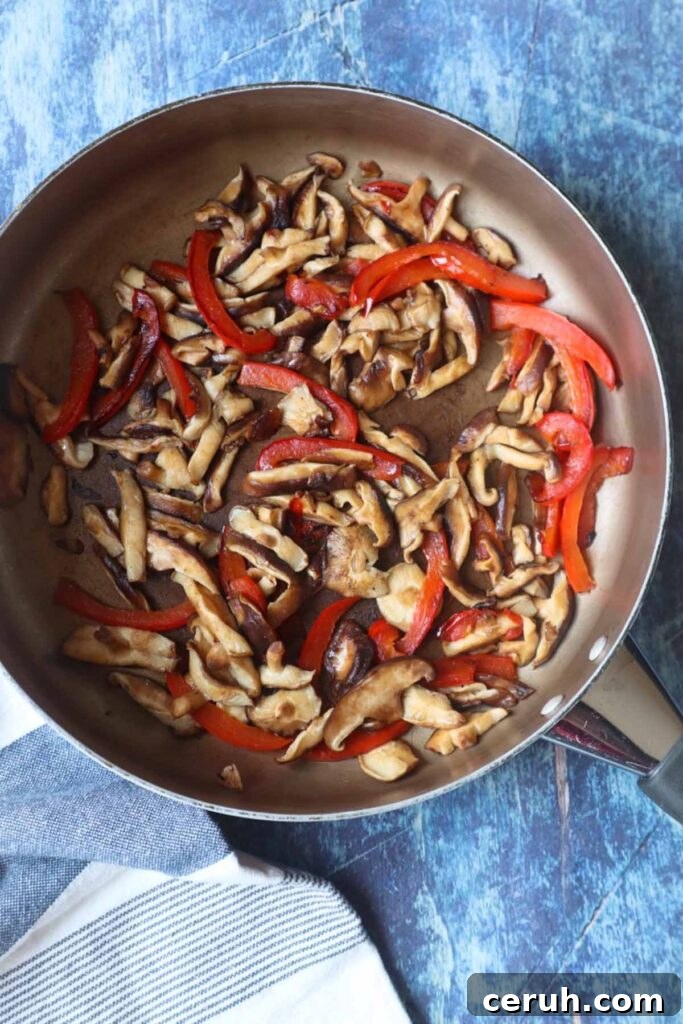
Sesame oil – adds depth and a toasty note while sautéing. You can substitute a neutral oil if needed.
Red bell pepper – for color and sweetness; yellow or orange bell pepper are good alternatives.
Shiitake mushrooms – their earthy, smoky flavor soaks up sauce nicely. Substitute other mushrooms if preferred.
Pre-cooked udon noodles – convenient and fast. If using dried or frozen udon, cook according to package directions before stir-frying.
Simple Homemade Teriyaki Sauce
Soy sauce – provides the savory, salty base.
Water – dilutes and stretches the sauce so it coats rather than overwhelms.
Brown sugar – balances the soy with sweetness; maple syrup or honey can be used instead.
Rice wine vinegar – adds brightness and a touch of acidity.
Garlic – fresh minced garlic gives the best aromatic flavor.
Ginger – fresh ginger adds warm spice; a little goes a long way.
Cornstarch – thickens the sauce so it clings to the noodles instead of making the dish soupy.
Equipment Needed
No special tools required. Basic kitchen equipment works well:
- Large pot – for boiling udon if using dried or frozen noodles.
- Strainer or colander – to drain cooked udon.
- Cutting board and knife – to prep vegetables, garlic, and ginger.
- Wok or large skillet – for stir-frying the vegetables and noodles.
- Spatula or tongs – for tossing ingredients in the pan.
- Small bowl – to mix the teriyaki sauce before adding it to the pan.
- Measuring utensils – to measure sauce ingredients accurately.
Optional: whisk for the sauce, garlic press for easy mincing, and a saucepan if you prefer to simmer and thicken the sauce separately.
How It’s Made
Step 1. Heat sesame oil in a large pan or wok over medium-high heat.
Step 2. Add sliced red bell pepper and sauté 2–3 minutes until it begins to soften. Add sliced mushrooms and stir-fry 1–2 minutes, or longer for more tender mushrooms.
Step 3. While the vegetables cook, whisk together soy sauce, water, brown sugar, rice wine vinegar, minced garlic, minced ginger, and cornstarch in a small bowl until smooth. Set aside.
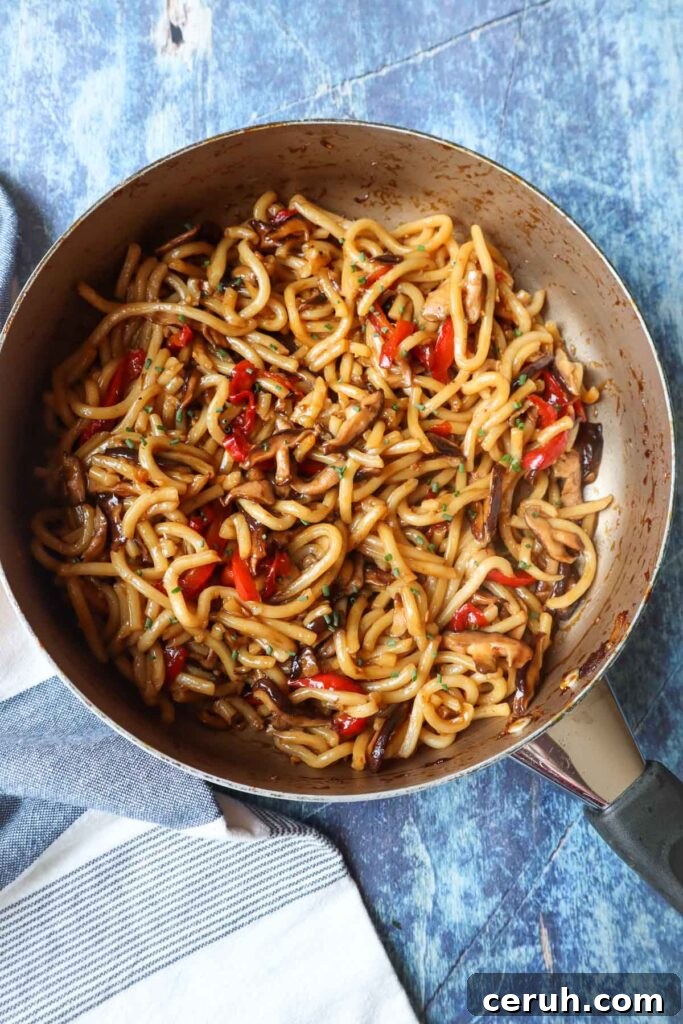
Step 4. Add the pre-cooked udon noodles to the pan and stir-fry 1–2 minutes to heat through. Pour in the teriyaki sauce, bring to a simmer, and stir until the sauce thickens and evenly coats the noodles and vegetables. Serve immediately.
How Teriyaki Udon Is Made with Dried or Frozen Noodles
If using dried or frozen udon, cook according to package instructions, drain, then continue with the stir-fry steps. Cooking packaged noodles first adds a few extra minutes but produces the same satisfying result.
Tips for The Best Results
Cook noodles just before al dente: When using dried or frozen udon, stop cooking slightly firm so they finish in the pan and absorb the sauce.
Preheat the pan: A hot pan helps vegetables sear quickly and keeps the stir-fry from becoming greasy or soggy.
Use high heat: Stir-fry on medium-high to high heat for quick cooking and a slight char. Avoid overcrowding the pan so ingredients fry instead of steam.
Prep sauce in advance: Have the teriyaki sauce mixed and ready to add. If the cornstarch settles, give the sauce a quick whisk before pouring it into the pan.
Finish with garnishes: Add sliced green onions, chives, sesame seeds, cilantro, or a squeeze of lime for brightness and texture.
Must Try Variations
Chicken Teriyaki Udon: Sear bite-sized chicken pieces in the pan before the vegetables, then proceed with the recipe so the chicken picks up the sauce.
Chicken Yaki Udon: A popular variation with cabbage, carrots, and extra vegetables for a complete meal.
Spicy Teriyaki Udon: Stir in sliced red chilies, chili garlic sauce, or sriracha to the sauce for heat.
Teriyaki Beef Udon: Add thinly sliced beef, seared quickly, for a rich and savory option.
Vegetarian Teriyaki Udon: Omit meat and load the dish with broccoli, snap peas, carrots, tofu, or tempeh for protein and texture.
Teriyaki Seafood Udon: Sauté shrimp or scallops separately and fold them in at the end to avoid overcooking and excess moisture.
Delicious Pairings
Serve teriyaki udon with simple Japanese sides for a balanced meal.
Miso Soup: A light, savory starter with tofu and seaweed complements the noodles well.
Gyoza: Pan-fried or steamed dumplings make a satisfying accompaniment.
Edamame: Steamed edamame with sea salt offers a healthy, textural counterpoint.
Tempura: Crisp tempura vegetables or shrimp add a pleasant crunch alongside the soft noodles.
Japanese Salad: A fresh salad with cabbage, carrots, cucumber, and sesame-ginger dressing brightens the plate.
Steamed Vegetables: Simple steamed broccoli, snap peas, or bok choy keep the meal light and colorful.
Storing and Reheating
Cool leftovers to room temperature, place in an airtight container, and refrigerate for 3–4 days.
Reheat in the microwave in short intervals (30 seconds), stirring between each interval and covering with a damp paper towel to preserve moisture. You can also reheat gently in a skillet with a splash of water to loosen the sauce.
Frequently Asked Questions
Is this recipe vegan?
Yes — the base recipe is plant-based when made with udon that contains no eggs and using the listed sauce ingredients. Always check noodle packaging if you follow a strict vegan diet.
Why use a wok?
A wok’s shape concentrates heat at the bottom and distributes it up the sloping sides, which promotes quick, even cooking and allows easy tossing. A large skillet works fine if you don’t have a wok.
What are udon noodles?
Udon are thick Japanese wheat noodles with a chewy texture that absorb sauces and broths well, making them ideal for stir-fries and soups.
What’s the difference between ramen and udon?
Udon are thick and chewy, while ramen noodles are thinner and springier. They differ in texture, typical ingredients, and how they perform in broths or stir-fries.
More Recipes Like This One
One Pot Gochujang Pasta
Shrimp Chop Suey
Easy Pho Xao
Garlic Pepper Beef
Chili Garlic Ramen Noodles
The Best 15 Minute Teriyaki Udon
Kate
Pin Recipe
Ingredients
- 1 tablespoon sesame oil
- 1 red bell pepper sliced thinly
- 5 oz sliced shiitake mushrooms
- 400 grams pre-cooked udon noodles
Teriyaki Sauce
- ¼ cup + 2 tablespoon soy sauce
- 2 tablespoons water
- 3 tablespoons brown sugar
- ½ tablespoon rice wine vinegar
- 1 clove garlic minced
- 1 teaspoon minced ginger
- 1 tablespoon cornstarch
Instructions
-
Heat sesame oil in a large pan or wok over medium-high heat.
-
Sauté sliced red bell pepper 2–3 minutes until it begins to soften. Add sliced mushrooms and stir-fry 1–2 minutes or until tender to your liking.
-
While the vegetables cook, whisk together the teriyaki sauce ingredients in a small bowl until smooth. Set aside.
-
Add pre-cooked udon and stir-fry 1–2 minutes. Pour in the sauce, bring to a simmer, and stir until the sauce thickens and coats the noodles and vegetables. Serve immediately.